
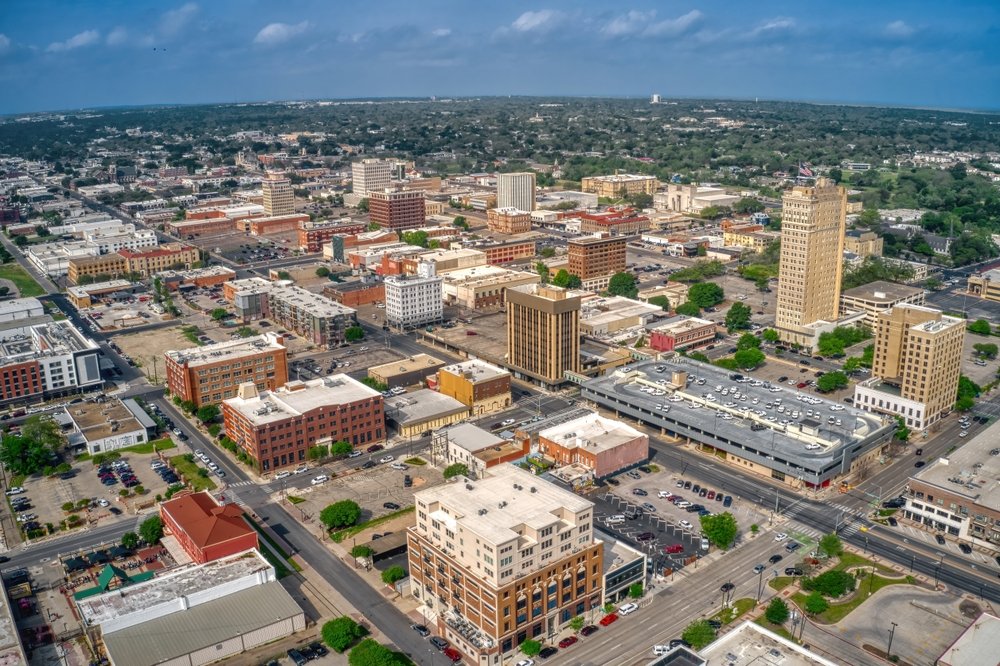
Concrete in Waco gets poured between a river and an interstate, and both shape the work. The Brazos River and Lake Waco mean drainage, floodplain awareness and soft ground near water, while Interstate 35 means trucks, deliveries and the logistics owners who locate beside it. We build foundations, slabs, paving and underground utilities in that setting for universities, hospitals, food-industry operators and developers.
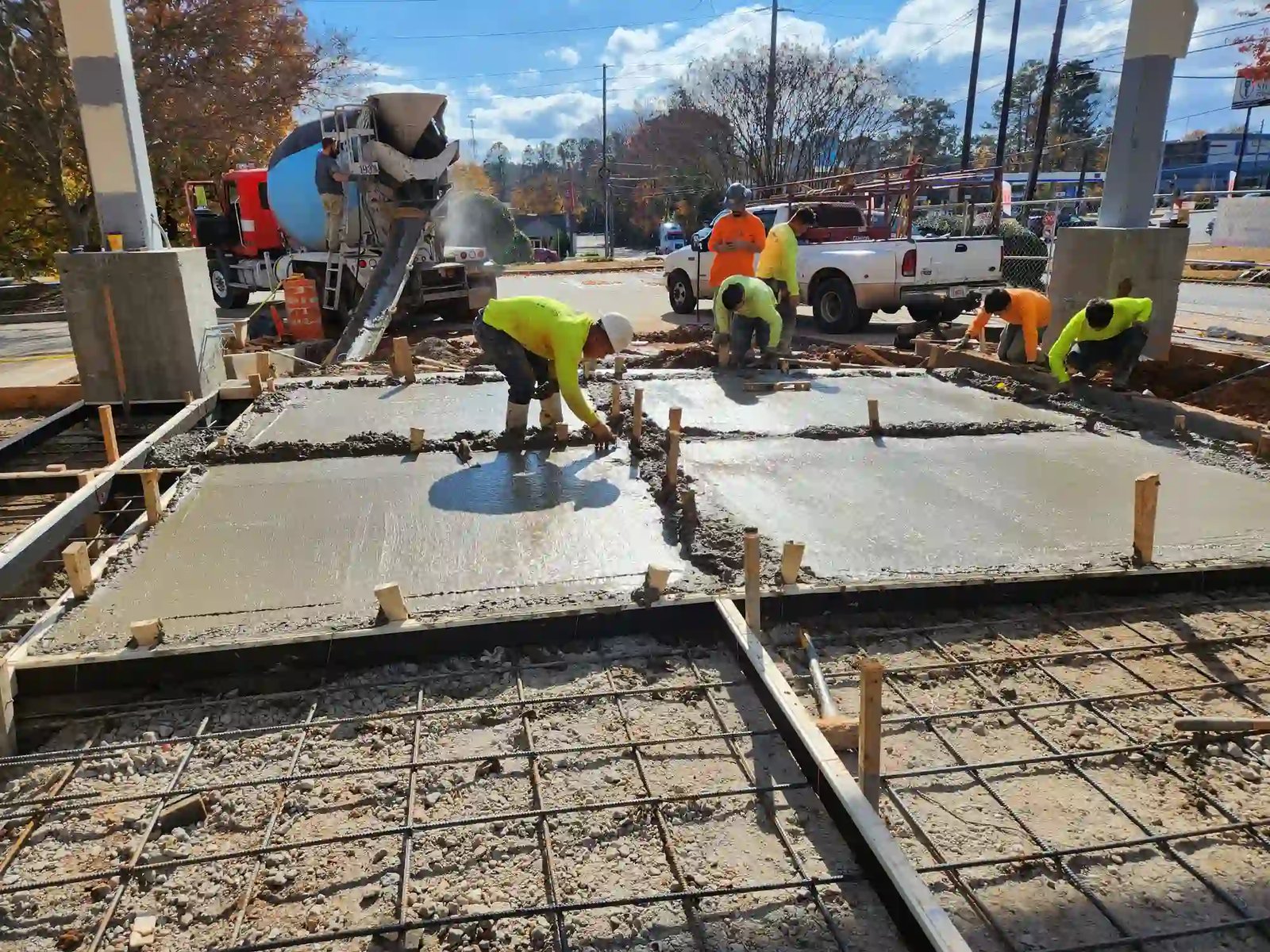
Our trade partners arrive with the whole sequence: stripping and grading, utilities, subgrade treatment, forming, reinforcing, placing and curing. In central Texas, the clay beneath a site can swell and shrink with the seasons, so we pay particular attention to moisture control and to how a slab sits on the ground it will live on. We read the geotechnical report before we promise a schedule.
We work with general contractors, owners and developers who want a straight answer on cost and time. Our proposals show earthwork, utilities and concrete as separate lines, so you can see what the ground is costing and what the building is costing.
A regional center on I-35
Waco is served by Interstate 35 as its main north to south highway and US 84 as its main east to west thoroughfare; State Highway 6 angles from northwest to southeast toward Bryan/College Station and Houston, and Loop 340 bypasses the city on the east and south. For a contractor, that network matters for deliveries and for the logistics and manufacturing owners that choose Waco as a regional base. It also means ready-mix and aggregate come from several directions, and we pick suppliers by haul time to the specific site. Warehouse and distribution center owners on the interstate frontage generally want truck courts and dock aprons first, so we sequence the paving ahead of the interior slab when the schedule allows.
American Eagle flies daily from Waco Regional Airport to Dallas/Fort Worth International. Airport-area development tends to add hangar space, light industrial buildings and parking, and it comes with height and drainage review that we plan for with the owner. Aprons and hangar floors need smooth slopes away from doors, accurate door-track embeds and joints placed where aircraft tires will not hammer them.
How we treat central Texas ground
Our approach begins with the soil. We review borings, ask about plasticity and groundwater and decide with the engineer whether the pad needs lime treatment, a soil swap or a post-tensioned design. We test moisture and density as the work proceeds, and we do not place concrete on a subgrade that has been rained on until it has been dried and retested.
The second element is control of water. We grade to drain, install erosion controls early and build swales and temporary sumps so rain moves away from the work. A quick reaction to a storm is often the difference between a one-day delay and a one-week delay. After each storm we walk the site, clear inlets, repair silt fence and pump low areas before the next crew arrives.
Hospitals, campuses and food plants
On the 2023 list for McLennan County, Baylor University led with 3,253 employees, then Ascension Providence (3,075), Waco ISD (2,373), H-E-B (2,000), Baylor Scott & White Hillcrest (1,736) and Sanderson Farms (1,200). That mix points to healthcare hospital and clinic work, education and school buildings, grocery distribution and poultry-related processing. Each has distinct concrete needs: vibration-limited floors and generator pads for healthcare, durable plazas and parking for campuses, and washdown slabs with sloped drains for food processing.
We build all of those. We do not say we built for any specific organization on that list, only that the buildings its peers occupy are the kinds we know. A food plant, for instance, needs sloped floors that drain to trench drains, a dense finish that resists cleaning chemicals and joints sealed with compatible materials, and we plan the details with the owner's sanitation staff. For a hospital, we also coordinate generator pads, medical gas vault sleeves and the vibration limits that imaging rooms impose, working in phases to keep patient routes open.
Where costs come from on central Texas sites
The largest cost swings come from the subgrade and from water. A parcel near the river may need dewatering or a deeper cut; a parcel on stiff clay may need lime treatment and extra moisture conditioning. We carry unit rates for those items and update the numbers when borings are available. Owners then pay for what the site demands, not for a guess.
Hauling is the next factor. Ready-mix delivered across a congested corridor or a long distance costs more and requires admixtures to hold the mix. We ask suppliers for delivery times and plant capacity before we bid, and we tell owners when a second plant is worth arranging as a backup. Our work for industrial and manufacturing owners shows the same cost logic in a larger form. Where the owner can accept a thinner section in a car lot and needs a thicker one at the dock, we price both so the money goes where the traffic is.
Working near water and traffic
The Brazos River runs through Waco, crossed first by the 475-foot brick Waco Suspension Bridge finished in 1870, and Lake Waco is a reservoir on the city's western edge. Work near the river corridor and the lake edge brings floodplain, erosion and slope hazards. We inspect excavations daily, use shoring where required, and stop work when forecasts call for heavy rain.
Traffic safety is the second concern. Where trucks enter or leave busy roads, we use flaggers, signs and a stabilized entrance, and we keep haul roads watered and swept. Workers wear high-visibility gear and attend a daily briefing. Owners who want to see our safety documents can ask for them before we start, and neighboring work in Temple and Killeen uses the same procedures.
Tell us about your Waco site
Send the drawings and the soil report and tell us your target dates. We will tell you where the water and the clay are likely to affect the schedule and what we recommend.
Common Questions
How do you deal with expansive clay in the Waco area?
Expansive clay moves with moisture, so we manage moisture before and after the pour. Depending on the geotechnical report, the engineer may call for lime treatment, a select fill cap, a post-tensioned slab or drilled piers. We build to the design and test the subgrade as the work proceeds.
Can you build near the Brazos River floodplain?
Yes, within the limits set by the floodplain rules and the approved plans. Owners and engineers handle floodplain review; we handle dewatering, erosion control and the construction details. If the water table is high, we plan pumping and a drier season for deep work.
What kind of slab does a food plant need?
A dense, well-cured slab with sloped surfaces to drains, sealed joints and a finish that resists cleaning chemicals and traffic. The engineer specifies thickness and reinforcement. We coordinate trench drains, curbs and equipment pads so washdown water goes where it should.
How quickly can you mobilize on a Waco project?
That depends on the scope and the season, but small repairs can be mobilized within days and larger projects in a few weeks. Permits, locates and soil testing set the pace more than the site equipment does, so we start those as soon as an award is made.