
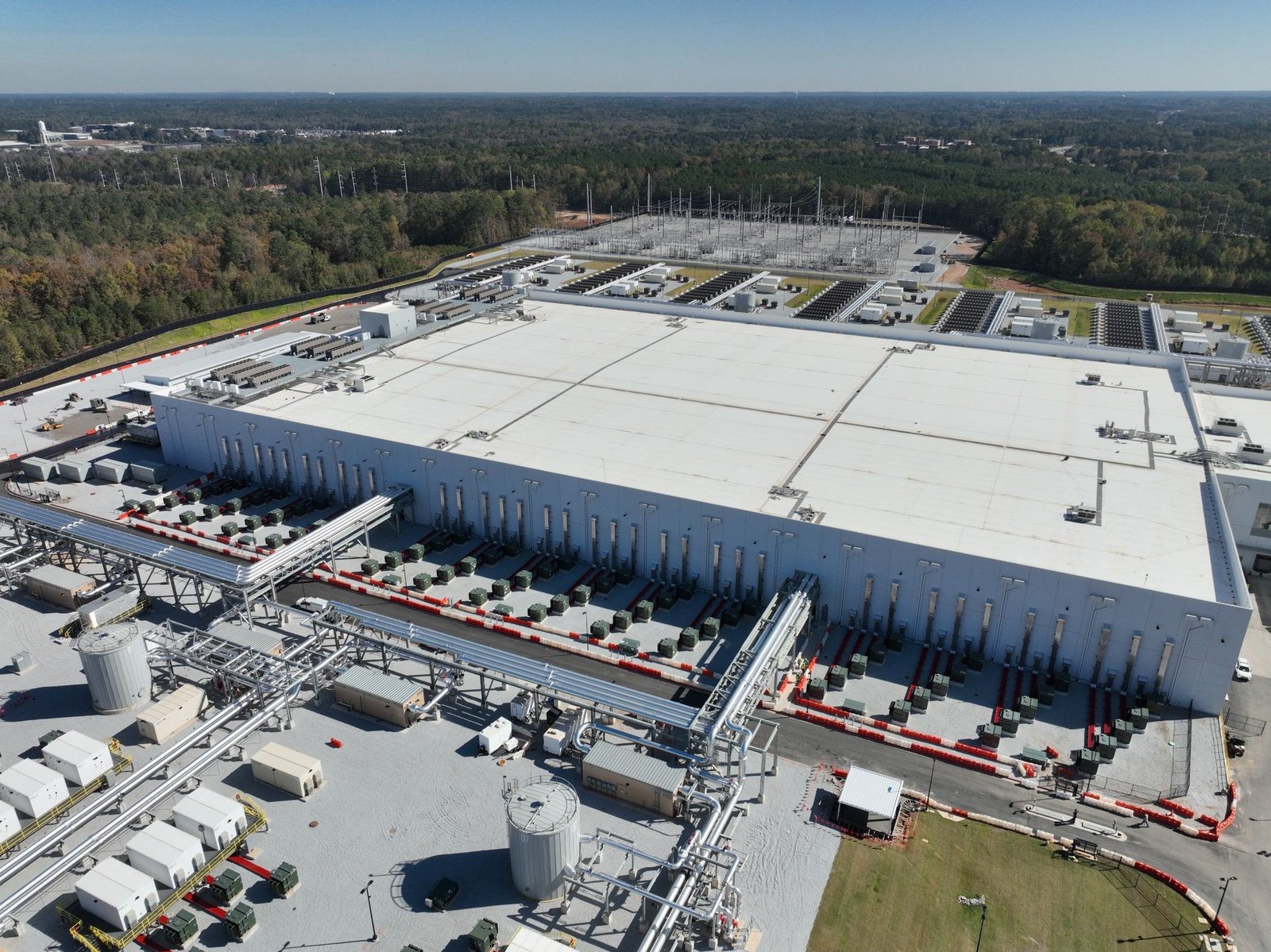

Roughly 474 gigawatts of requested interconnection capacity sit in ERCOT's queue, and about 90 percent of it comes from data centers, according to figures reported in August 2026. Whatever share of those requests turns into steel in the ground, the pace explains why data center owners are asking Texas contractors for large, fast, repeatable site packages: mass grading, thick slabs, generator and switchgear pads, duct banks and fiber trenching, all delivered before the first server hall is enclosed.
We build the concrete, the underground and the earthwork side of those campuses. The buildings themselves are often tilt-up or precast shells, but their value sits in the electrical and mechanical yard around them, and that yard is mostly concrete and trenching. Getting the pads level and the duct banks right matters more than usual because the equipment arriving later is heavy, expensive and unforgiving about tolerances.
Policy and power availability are moving targets, so we pair the construction plan with an honest read of what the schedule depends on.
Where the large campuses are going
West Texas and Central Texas are both drawing very large sites. Meta announced a 1.2 million square foot, roughly $1.5 billion campus in northeast El Paso on about 1,039 acres, with 1,800 construction jobs at peak and an expected online date of 2028. A company spokesperson put eventual capacity at 1 gigawatt. In Abilene, reports describe a multi-building campus developed by a joint venture and leased to a technology tenant, with figures from secondary sources that should be confirmed against the operators. A 135,000 square foot data center has also been described for an 87.97-acre tract in Taylor, again on a secondary source.
Those numbers, even with caution, describe projects where a contractor's first year is mostly sitework: clearing, mass cut and fill, haul roads, temporary drainage and early utilities. Mass grading and import, export and haul-off become the critical path, because the buildings cannot start until the pads are certified.
Interconnection rules that shape the schedule
Texas Senate Bill 6 directs the Public Utility Commission to set interconnection standards for large loads in ERCOT, with a demand threshold of 75 megawatts. Per the bill analysis, large loads must show site control, pay a study fee of at least $100,000 for initial transmission screening and meet financial commitment requirements, and those connected at transmission voltage after the end of 2025 must install equipment that allows curtailment during firm load shed.
In August 2026, the governor called for a pause on new data center interconnections and a community impact review of facilities of 25 megawatts and above, and ERCOT said it will not complete its Batch Zero study by its April 2027 deadline. We do not forecast utility decisions, and owners should expect the power timeline to be the largest uncertainty. What we can do is prepare the site so that when energization dates firm up, the pads, duct banks and substation foundations are ready. Building codes still follow the city's adopted edition and local amendments.
Pads, duct banks and fiber on a campus scale
The yard around a data hall typically holds generator pads, fuel storage containment, switchgear and transformer slabs, chiller or cooling pads and a network of electrical duct banks encased in concrete. The electrical duct banks crews we coordinate excavate, place conduit with spacers, encase and backfill in controlled sequence, with marker tape and surveyed as-builts for the owner's records. Fiber paths run alongside through conduit and fiber trenching, sometimes with redundant routes entering from different directions.
The building floors are thick, flat and heavily loaded where batteries and racks sit. Slabs may be jointed or post-tensioned depending on soils, and the floor's cure and protection plan has to survive months of equipment installation. Where the design calls for heavy transformers, our equipment pads and machine foundations work provides the reinforced, level bearing surfaces.
Moving fast without breaking the sequence
Data center owners often want the building enclosed in the shortest possible time, and that pressure falls on the earthwork and concrete crews. We plan for parallel operations: grading while utilities are being potholed, pads under construction while duct banks are being laid, and slabs placed in large sequential pours with batch plants and haul times confirmed ahead. Hot-weather placements in West Texas need evaporation control and early starts, and wind in open country can dry a surface faster than it can be finished.
Because ready-mix haul distance can control quality on remote campuses, we look at the supply plan early and discuss portable batching or backup suppliers when a campus is far from existing plants. The sequencing of inspections, particularly for underground work that will be covered, is documented and scheduled with the owner's representative.
What moves a campus budget
Soil treatment, haul distance, concrete quantity, and electrical duct bank volume are the largest swing items. A campus on a thousand acres can spend as much on roads, drainage and utility corridors as on the first building. Early geotechnical work reduces risk, and owners benefit from phasing so that infrastructure is built for the whole campus while buildings are added as power arrives.
Owners also differ on how much to build ahead of power. Spending on infrastructure before interconnection is confirmed carries risk, and holding back risks delay. We help owners choose which elements to pour now (roads, drainage, underground backbone) and which to hold until energization dates are clear. A related building type, the tilt-wall building, is a common shell choice, and our utilities and energy company clients often meet us on these sites.
Related scopes on the same site
Data campuses also need stormwater control, so detention and retention ponds and erosion control tied to the stormwater plan are built early. Fire lines, water for cooling where specified, and sanitary service round out the underground package. Many owners also look at nearby manufacturing plant work when the same site includes equipment assembly or support facilities.
Get the site ready for energization
Send the campus plan, soils report and power timeline and we will return a phased grading, pad and underground plan.
Common Questions
How long will power take, and does it affect your schedule?
Utility energization dates are set by the utility and ERCOT process and can change, so we treat them as an input, not a promise. We schedule site, pad and duct bank work so it is ready ahead of the earliest likely date, and we avoid spending on elements that depend on a power decision unless the owner chooses to.
Do data center slabs need to be post-tensioned?
It depends on soils, loads and the engineer. Many data halls use conventional reinforced slabs on grade; where soils are expansive, post-tensioning can help. We build whichever is specified.
Are the large West Texas campuses reliable benchmarks for planning?
Some of the figures come from secondary reporting and from announcements, so we recommend using them as indicators of scale and not as budget numbers. We build estimates from your own drawings, soil report and haul distances.
What is the biggest site risk on a remote campus?
Concrete supply and water. Distance from batch plants and a lack of nearby utilities can control the schedule, so we address supply early.