
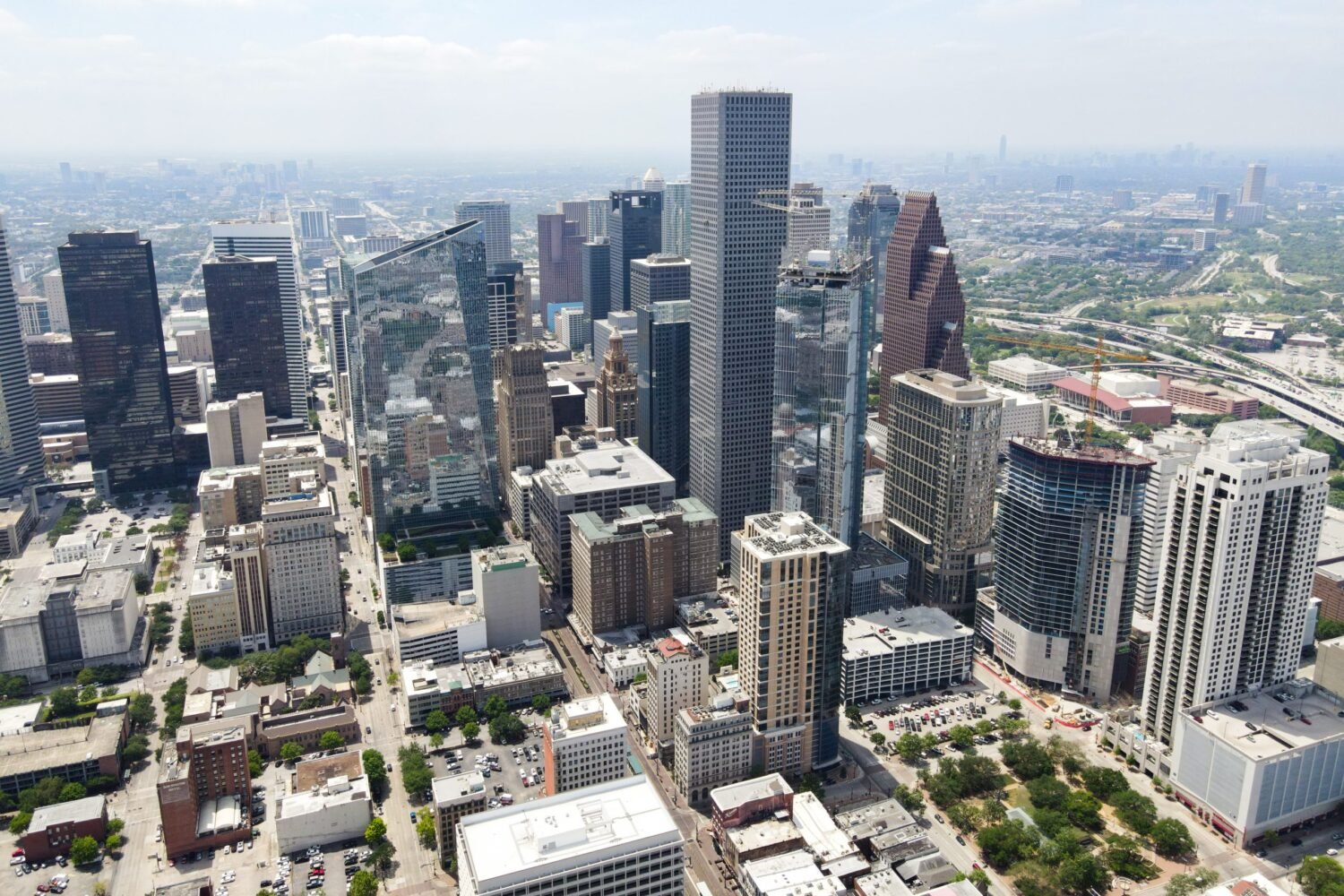

Everything in Houston sits on flat, low-permeability clay and silt, which means water decides how a slab is designed, how a pad is graded and how long a job takes. We build industrial slabs, truck courts, foundations, pavement and underground utilities for logistics operators, plant owners and general contractors, and we begin every project by asking where the water will go.
The region is described as flat and marshy, with an extensive drainage system and prairie soils of low permeability, and flooding is called a recurring problem. For a contractor, that points to specific practices: raise pad elevations to the plan, build detention before paving, grade for positive drainage and pump when the ground gets wet. In the Gulf Coast gumbo, a subgrade that is dry in the morning can be a pool by afternoon, so we crown it, seal it and keep pumps staged.
We price earthwork, utilities and concrete separately, from the geotechnical report, so owners can see what the clay costs them.
The ship channel and its terminals
Port Houston reported 54,491,066 short tons of cargo across its public terminals in 2025 (release dated January 30, 2026), and describes the Houston Ship Channel complex, with more than 200 private and eight public terminals, as the nation's largest port for waterborne tonnage. It also stated $2.1 billion in planned landside capital investments over the next five years to improve capacity and cargo fluidity.
We do not claim any port work. What those figures mean for site contractors is demand for container yards, trucking facilities, warehouse pads and heavy pavement on the roads that feed the terminals. Container yard pavement is a specialty: thick concrete or interlocking pavers over carefully prepared base, joints designed for stacker and top-loader traffic, and drainage that handles heavy rain. Our concrete paving and truck terminal and cross-dock experience in the basics applies directly.
Subsidence and why elevations matter
Groundwater pumping in Harris and Galveston counties is regulated by the Harris-Galveston Subsidence District, which the Texas Legislature created in 1975 and which publishes subsidence rate maps. Land that sinks changes elevations over time, which affects drainage, flood risk and pavement slopes. A parcel that drained well years ago may not drain well now.
When we build, we use current survey, confirm benchmark elevations and match the plan's design elevations rather than relying on neighboring pavements. We also ask civil engineers about outfall elevations and detention volumes, because a few inches change how water leaves a site.
Working gumbo
Clay-silt soils can be sticky when wet and hard when dry, and they swell and shrink. Common remedies include lime or cement treatment, a select fill cap, moisture conditioning and sometimes post-tensioned slabs. We follow the engineer's design and add practical measures: we limit open excavation, haul out wet spoil rather than let it sit, and build temporary roads with base and geotextile so equipment does not rut the subgrade. The lime and cement soil treatment crews we coordinate can treat large areas efficiently.
Underground work needs particular care. Trenches near groundwater need dewatering, shoring and pipe bedding that does not wash out. We test pipe before backfill and keep a record.
Airport-area and big-box logistics
Houston's George Bush Intercontinental Airport sits about 23 miles north of Downtown Houston on 10,000 acres, with five runways, the longest at 12,001 feet. A reported 48,131,213 passengers used it in 2025. Airport-area development tends to include hotels, parking, cargo buildings and logistics, each with big paved areas and drainage review. Warehouse and cargo buildings near the airport need dock aprons, truck courts and car parking designed for heavy and frequent traffic.
The area's industrial market also matters. A published report put the Houston area's industrial vacancy rate at 6.8 percent in the second quarter of 2026, so speed to occupancy matters to developers. We help by keeping the dirt phase tight.
Ring roads and haul planning
Houston's ring roads shape deliveries: Interstate 610 is the inner loop, Beltway 8 has a radius of about 10 miles from Downtown and State Highway 99, the Grand Parkway, has a radius of 25 miles. Trucks move along those and across them, and haul time varies sharply with the hour. We plan pours and deliveries for off-peak windows and choose plants by real travel time.
Permits differ across the city, the county and special districts, and we work with the civil engineer to line up drainage, grading and utility approvals.
Rain, heat and the pour calendar
Houston's weather is a scheduling input, not a surprise. Afternoon storms, long humid summers and sudden wet spells all shape pour days. We pour large slabs in the early morning, keep forecasts open at the batch plant and set a cutoff time after which no more trucks leave. If a storm cell approaches, we have plastic, pumps and a planned joint ready.
Curing in humid heat is easier than in dry wind, but high temperatures still speed set. We use retarders where needed and finish with extra hands so the surface is not rushed. Finally, we plan trucks for the longest traffic scenario, not the best, because a mix that waits in traffic for an hour is a mix that arrives with problems.
Safety and environmental care
Large Houston sites involve heavy trucking and wet ground. We enforce a site traffic plan, keep haul roads clean, use spotters and require fall protection at excavations. Stormwater controls are installed first and checked after every storm because a storm outfall is a public concern.
Concrete washout stays in lined containment, fuel is stored with secondary containment and spills are cleaned immediately. Crews have water and shade in summer, and we adjust hours when heat advisories are posted.
Where Houston pricing moves
Water is the largest driver. Dewatering, pumping, stabilized haul roads and weather delay all add cost, and they vary with season. Detention volume is next: excavation of ponds and basins can be a large share of the earthwork. The third is pavement thickness on truck-heavy sites.
We try to make these visible. A proposal with unit prices for dewatering, undercut and treatment lets an owner see how changes affect cost.
Neighboring Gulf Coast markets
Houston owners frequently work across the metro area, including Katy to the west and Sugar Land to the southwest. Developers in the logistics and warehouse business often ask for pricing in several of these submarkets at once, and we provide it.
Send us your Houston plans
Share the drawings, the soil report and your drainage plan. We will tell you how we would handle the water and the schedule.
Common Questions
How do you build on Houston clay?
By following the geotechnical report and managing moisture and water. Treatment, select fill, drainage and careful sequencing are the main tools.
Why does subsidence matter to my site?
Because elevations change, and drainage that was adequate may no longer be. We work from current survey and the engineer's elevations.
Can you build container-yard pavement?
Yes. We build heavy concrete pavement with doweled joints and drainage designed for stacker and top-loader traffic.
How do you keep work going in wet weather?
With stabilized haul roads, pumps, early erosion control and a sequence that shifts to work that can proceed. We also protect the subgrade each night.