
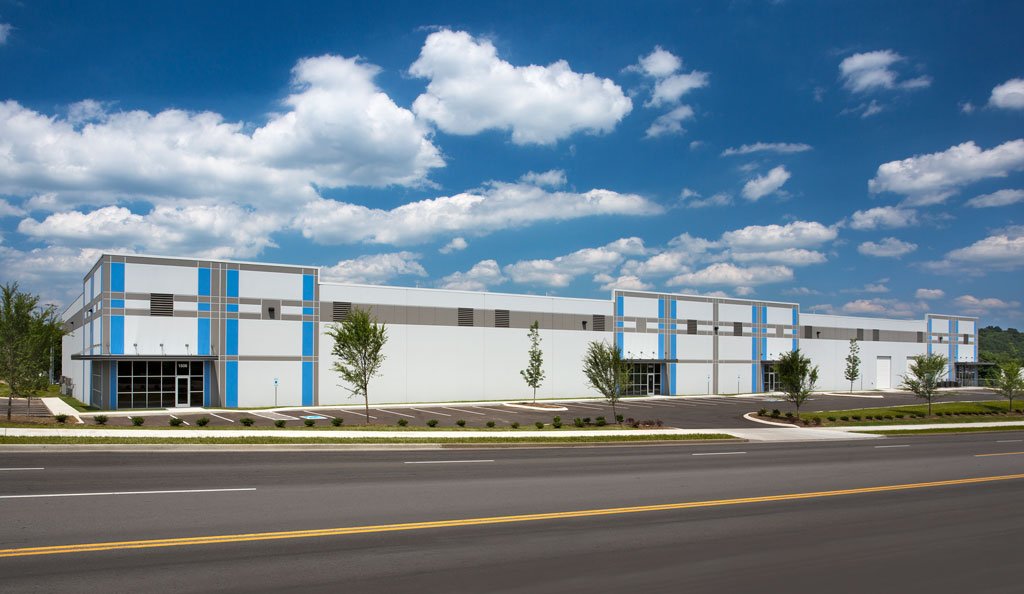
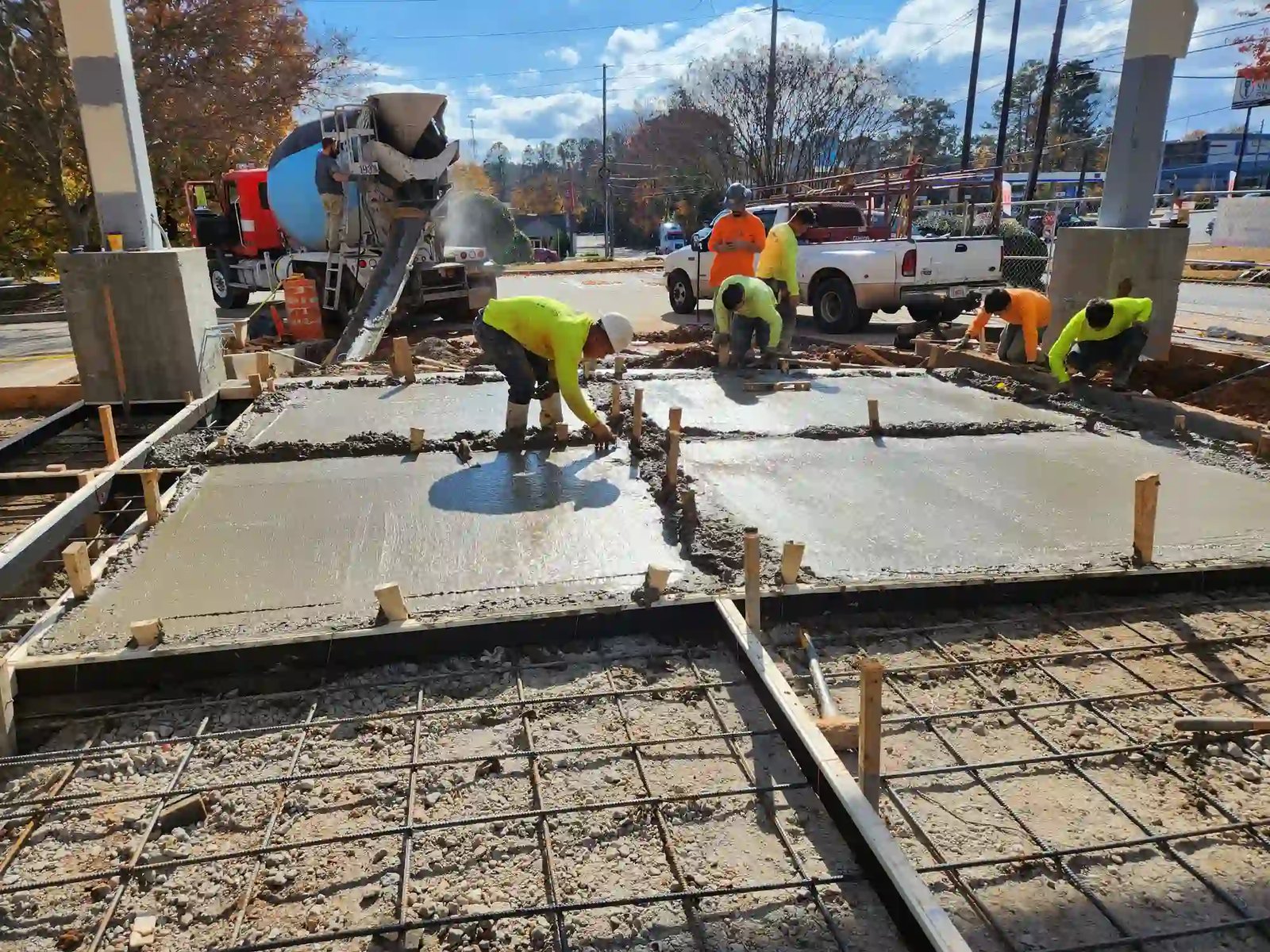
Speculative big-box developers win or lose on speed to shell and on how much of the budget sits in dirt, utilities and concrete before a tenant signs. A distribution building is mostly slab, dock apron and truck court, and the earthwork under it determines whether that slab is flat enough for the racking that will stand on it. We prepare and pour that scope for logistics developers across Texas, from the Dallas-Fort Worth industrial districts to the border corridors and the Gulf ports.
Warehouse sites are large, flat and fast. We run scraper fleets and grading crews to balance a pad, install storm and fire lines in the same mobilization, and set up pours so the slab, the dock pits and the concrete truck court can all be turned over to the vertical contractor in a planned order.
What follows covers where the logistics market is moving in Texas, how we plan the schedule, and the site conditions that most often surprise a developer on a distribution project.
What surprises developers on a distribution site
Subgrade is the first surprise. Clay under a 400,000 square foot floor moves with moisture, so the geotechnical report's recommendations for lime treatment, moisture conditioning or select fill become line items that can exceed the cost of the slab itself. We review the report at bid, identify where the treatment depth varies across the footprint, and sequence the work so treated subgrade is not left open to rain.
The second is the truck court. Trailer landing gear, braking, turning and rear axles load a pavement far more heavily than cars do, so the dock apron and the first trailer-length of court are typically thick concrete with doweled joints. Where the court is a long haul to a rail spur or a gate, the pavement type is a debate worth having. Our truck courts and dock aprons page explains how we detail them.
Where Texas freight is concentrating
Freight infrastructure shapes site selection. Texas has over 10,000 miles of railroad track and three Class I railroads operating about 84 percent of it, with a long tail of short lines. A Surface Transportation Board authorization in June 2026 allows a 2.6-mile short-line connection serving roughly 1,900 rail-served acres inside a 3,314-acre industrial park at I-35 and State Highway 255 near the border, which tells you the next generation of rail-served warehouse sites is being built right now.
Air cargo and regional parks round out the picture. A runway extension from 8,400 to 9,400 feet at Valley International Airport lets large freighters take off at higher weights, and the McAllen metro area reports 16 industrial parks serving over 150 companies. In southern Dallas, Lancaster's 2024 employer list shows a large retail employer with 2,125 workers and a logistics business park called Park 20/35, a reminder that big-box users and distribution parks grow side by side. We cover these places on our Laredo and McAllen pages.
What we build on a logistics campus
The scope includes site clearing and mass grading, storm sewer and detention, water and fire loops with hydrants, building pad preparation, floor slab, dock pits and ramps, tilt-up panel footings and slabs where the building uses them, truck courts, trailer parking, car parking, sidewalks and curb. Many developers also ask us to place ready-to-use pads for rooftop equipment and emergency generators.
Cold storage and food distribution add insulated slabs with under-floor heating or ventilation to prevent frost heave. Fulfillment facilities add mezzanine foundations and conveyor pits. Our distribution center and cold storage facility pages describe those floors in more detail.
Hitting the shell date
Developers talk about weeks to shell. We work backward from the date the roof contractor needs the slab, then schedule the grading, utilities, panels and pours with float for weather. Slab placement in long strips with laser screeds moves quickly, but cure time is a floor-flatness variable, so we do not rush stripping or saw cutting into a hot afternoon.
Ready-mix supply is the quiet risk on large pours. A 400,000 square foot slab may need hundreds of trucks over several days, and a plant that also serves a highway job may not keep up. We confirm batch capacity, backup plants and hauling times early, and we pour in the cooler hours in summer.
Corridors we serve
We mobilize across the Texas triangle, the Rio Grande Valley, the Houston ship channel region and the Gulf ports. Houston-area industrial parks along the Grand Parkway, the Dallas inland port, Alliance and the I-35 border corridor all share one need: a contractor who can scale a crew to a 100-acre site. Those details are on our Southern Dallas inland port page.
For owners who combine a warehouse with light manufacturing, see our work for industrial and manufacturing owners.
Other buyers who share the site
Logistics parks often include a utility easement, a municipal road extension or a public water main that must be built to city standards. We coordinate with municipal and public works agencies and with the contractors building the public portions, so your private site and their public improvements agree at the property line.
Developers who finish a warehouse and plan an adjacent retail or office pad can keep us on the project for both phases through our commercial developer program, which reduces remobilization cost.
Price the pad before the lease
Send the site plan, geotechnical report and building size and we will return grading, utility and slab numbers you can use in your underwriting.
Common Questions
How thick should a dock apron be?
The structural engineer sets the thickness, but dock aprons commonly use thicker, doweled concrete than the interior slab because of trailer landing gear and braking loads. We recommend asking for joint layout and dowel details at the permit set so the pour sequence can be planned.
Can you work with the tilt-up contractor's schedule?
Yes. We coordinate panel casting on the slab, panel footings, floor slab and the sequence of curing and lifting with the panel erector. A common conflict is panel casting space, so we plan the slab pour in two phases when needed.
What if the site needs fill from off site?
We price import by the cubic yard and confirm haul distance, source testing and truck availability. Engineered fill from an approved source is placed in lifts and tested, and the haul cost rises with distance, so we ask the developer to approve borrow sources early.
Do you handle the rail spur work?
We build the subgrade, ballast base preparation and concrete crossings for private spurs when the railroad's standards and review permit it. The rail itself is installed by a railroad-approved contractor, and we coordinate the crossings with them.
How do you keep trucks and the public safe near an open road?
We build construction entrances with rock or concrete aprons, use flaggers and signage, wash tires as needed, and sweep public roads regularly. The stormwater plan and construction entrance are inspected, and we keep them in compliance through the job.