
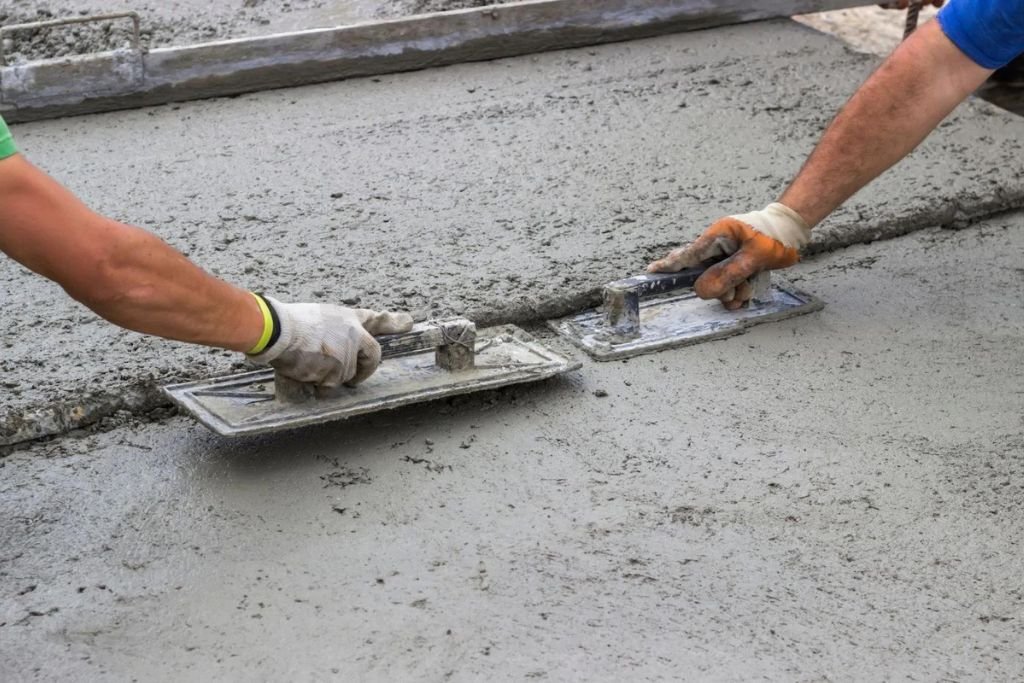

Heavy trucks, hot summers and clay that moves are three good reasons to pour a pavement instead of paving one. Asphalt gives a little under load and recovers slowly in 100 degree heat, while a well-built concrete pavement carries load by stiffness and spreads it over a large area of subgrade. For industrial yards, truck routes, bus lanes, plant roads and container storage, the longer life and lighter maintenance of a concrete section often outweigh the higher first cost.
We place concrete pavement for private owners, developers and public agencies across Texas, from small plant roads to large yards. The work is simple to describe and exacting to do: prepare a uniform subgrade, build a base that drains or is stabilized, set the joints, place the slab at the specified thickness and cure it long enough to open to traffic safely. Every region in the state changes the details, but the sequence holds.
Roads and yards across the state
Texas road programs keep expanding, and the scale is visible in the plans. In Lubbock, TxDOT is converting about 12.4 miles of rural roadway west of US 84 on Loop 88 into an access-controlled six-lane divided freeway with frontage roads, with two sections finished in April 2026 and the third scheduled for fall 2026. In Odessa, a TxDOT notice from April 2025 proposed widening about five miles of Loop 338 from a four-lane divided highway to a four-lane freeway with frontage roads, with right of way growing from about 200 to 400 feet.
Private owners build alongside those corridors. A 1,655-acre industrial park in Conroe is described as having four-lane concrete streets with city water and sewer, an example of how industrial parks use concrete for roads, and fleets, terminals and distribution sites in every part of the state use it for heavy yards. We work with oil, gas and midstream operators in the oilfield counties as well, where truck traffic and lease roads break down ordinary pavements.
Pavement design is the soil and the traffic
A pavement design starts with two things, the subgrade and the load. Subgrade strength and moisture sensitivity decide how much base and what stabilization is needed, and traffic counts and axle weights decide thickness and joint design. Clay subgrades often receive lime or cement treatment to reduce plasticity and give a uniform working platform, and we review treatment depth, curing time and proof-roll results before the base goes down. In caliche country, the subgrade may be firmer but irregular, and trimming it to a consistent depth is the main task.
Joint design completes the picture. Transverse joints are spaced to control cracking, typically with dowels to transfer load across them, and longitudinal joints are tied to keep lanes together. We lay out joints before the pour so they line up with inlets, manholes and drive entrances and so no panel has an awkward shape that cracks.
What our paving scope includes
A paving package typically covers subgrade trimming, base placement and compaction, edge forms or slipform setup, dowel baskets and tie bars, reinforcement where required, concrete placement, finishing, texturing, joint sawing, curing, sealing and traffic control until opening. For large areas, we use slipform paving or laser screeds; for smaller or irregular areas, we use forms and screeds that crews can handle by hand.
We coordinate pavements with the work around them. Parking lot concrete has its own drainage and striping requirements, and truck courts and dock aprons carry the heaviest and slowest loads on a site. Where owners compare against asphalt, asphalt paving base preparation work can be priced alongside a concrete alternative.
Specifications and what inspectors look for
Public pavements follow the owner's standard specification, which sets concrete strength, thickness, joint spacing, finishing and curing. Inspectors check subgrade proof rolls, base density, dowel alignment and thickness before the pour, and test cylinders and air content at the truck. Private sites follow the civil drawings and the geotechnical report, and we ask for the pavement design report early so we can price the materials accurately.
Drainage is reviewed along with the pavement. Cross slopes, inlet locations and joint patterns must work together, because water standing on a pavement reduces its service life. Where access or loading routes cross public roads, we obtain the permits and traffic control plans required by the city or TxDOT.
Cost, thickness and life-cycle thinking
First cost depends mostly on thickness, base, stabilization and haul distance. A pavement designed for container handlers or loaded tankers is considerably thicker than one for light trucks, and a site far from a ready-mix plant pays for extra trucks and retarder. Joint sealing, dowels and special finishes add smaller amounts but matter to long-term performance.
Life-cycle cost is where concrete earns its place. Fewer repairs, less rutting and no need for periodic overlays can make a concrete yard cheaper over time, especially at truck terminals and cross-docks where trailers sit loaded on one spot for days. We provide alternates and long-term cost comparisons so owners in Odessa, Lubbock and elsewhere can decide on more than the bid number.
Pour windows and opening to traffic
Pavement is placed in long, continuous runs, so the schedule depends on the plant, the trucks and the weather. We agree on batch rates with the ready-mix supplier, confirm a second plant when the run is large and keep a hot-weather and cold-weather plan on file for each pour. Evaporation control, curing compound and saw timing matter more in a 100 degree afternoon than anywhere else on the project, and in a cold snap we blanket the slab and delay sawing and opening.
Owners often ask how soon trucks can use the pavement. The answer is by strength, not by calendar, and we plan around the break results. For a plant or yard that has to keep operating, we place in phases so one half stays open while the other cures, and we keep traffic control in place until the engineer approves opening.
Planning a yard, road or plant pavement?
Share the traffic information, the geotechnical report and the site plan, and we will price the pavement and stabilization along with the joint plan and the opening date.
Common Questions
How thick should a concrete pavement be for heavy trucks?
Thickness is designed from the expected number and weight of axle loads and the strength of the subgrade. Heavy truck yards are thicker than parking areas, and the pavement engineer sets the number. We build to it and can recommend a stabilized subgrade to reduce the section when appropriate.
When can trucks drive on a new concrete pavement?
Once the concrete reaches the strength in the specification, which we confirm by cylinder or beam breaks. This is often several days in warm weather, but cold weather or slower mixes can lengthen it. Opening a pavement too early can cause permanent damage.
What causes cracks in concrete pavements?
Shrinkage, restrained movement, poor subgrade support and late saw cutting are the usual causes. We saw joints at the right time, use dowels and ties where required and keep the subgrade uniform to limit random cracking.
Is concrete or asphalt better for an industrial yard?
For heavy, slow or stationary loads and in hot climates, concrete usually performs better and lasts longer. Asphalt has a lower first cost and faster opening, so owners with lighter traffic or tighter budgets sometimes choose it. We can price both.