
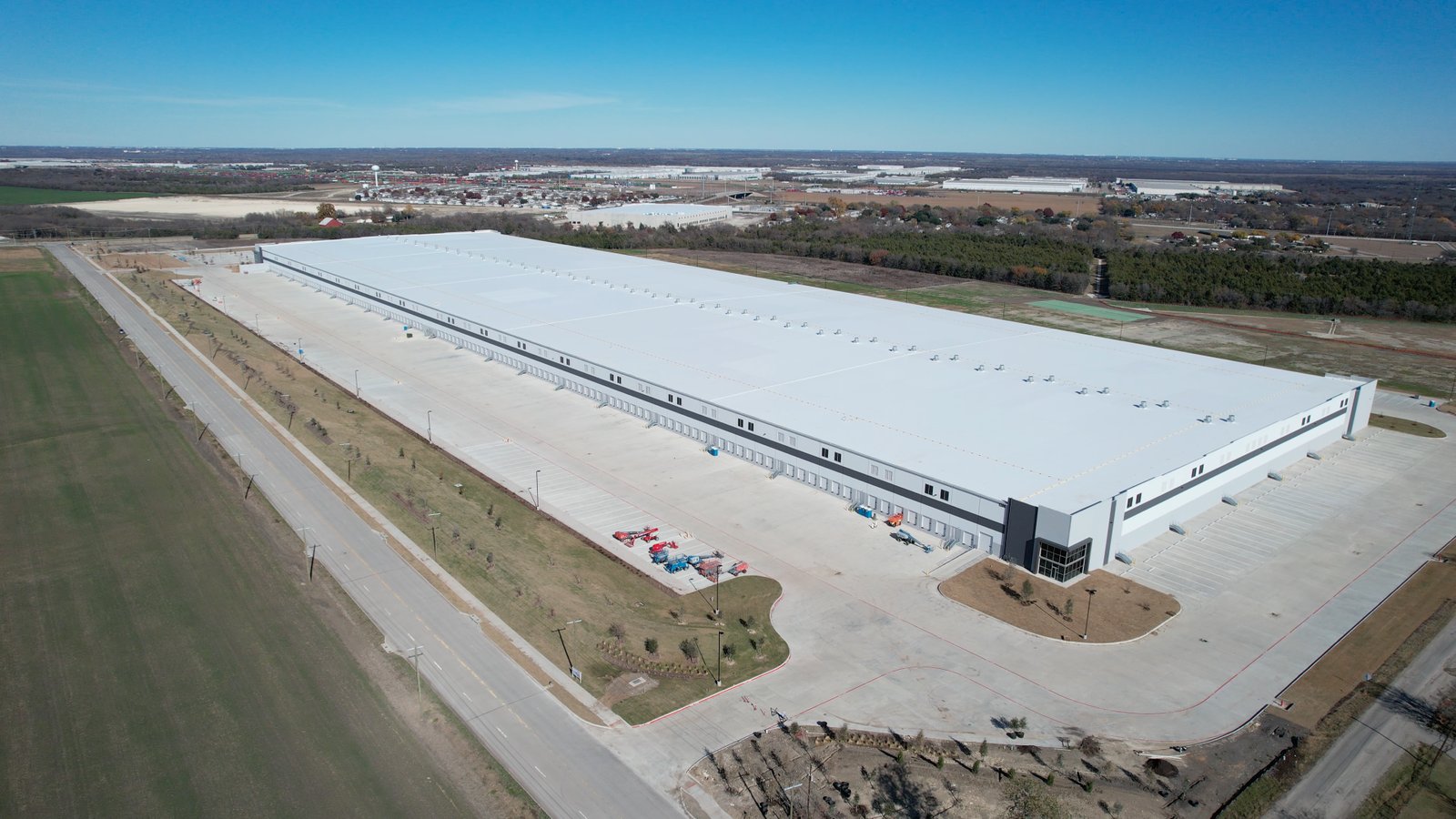
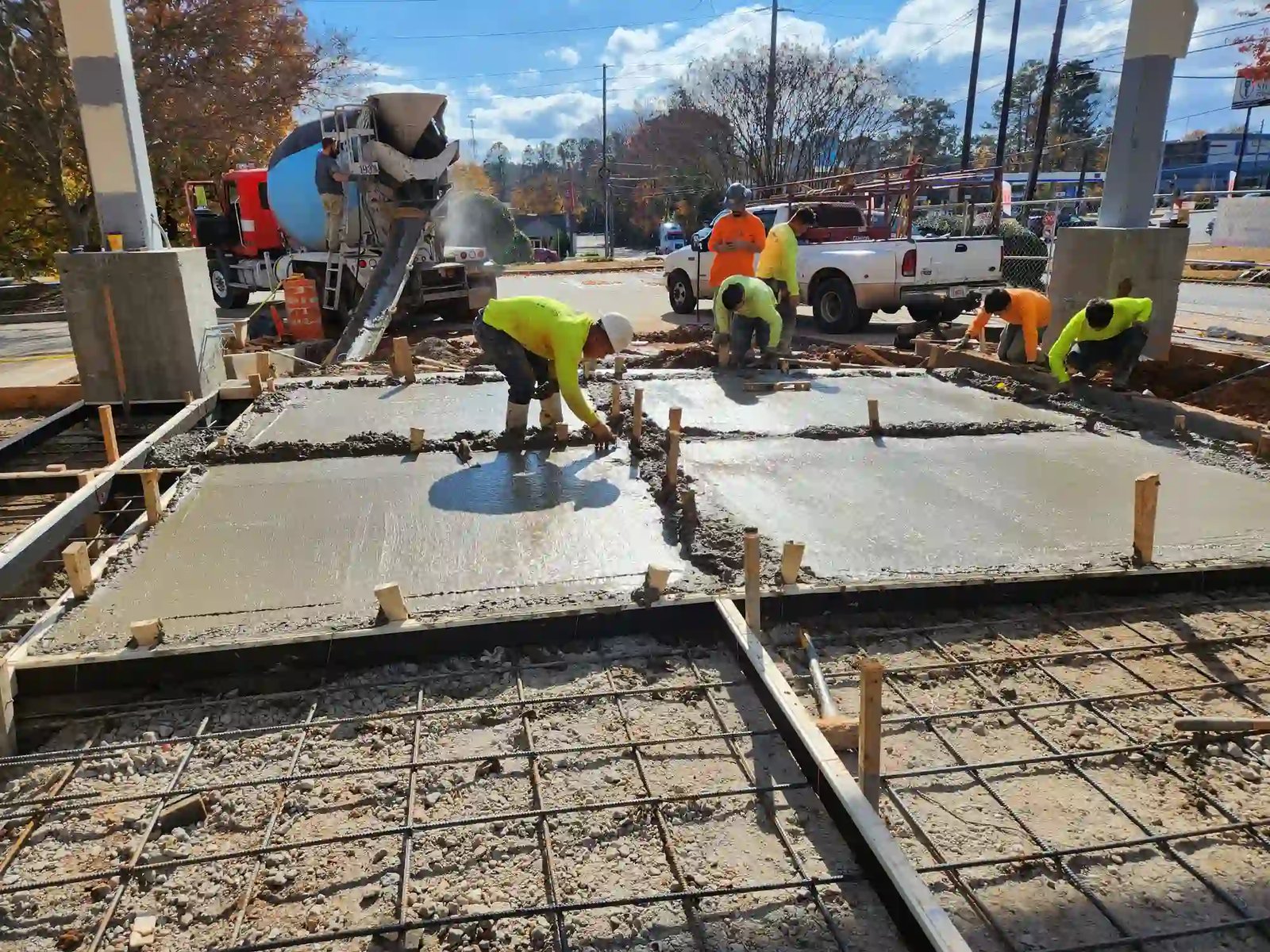
Intermodal logistics parks are mostly pavement, and the pavement is where the money goes wrong. In Wilmer, Hutchins and Lancaster, we build the truck courts, dock aprons and warehouse floors that sit beside the rail terminal, and we install the storm, sewer and water lines that make those sites usable. Owners who are new to the area want to know what the ground will do, how trucks will move and how soon the building can open.
Southern Dallas County is a freight-oriented area, and a contractor working there needs to understand rail, trucking and the schedule of a distribution operator. Heavy trailer traffic, quick tenant turnover and tight delivery dates mean that the concrete has to be right on the first pour. We bring forms, steel, finishing crews and earthmoving equipment under a single field supervisor.
Our approach in this corridor is to read the utility capacity and the soil before the pavement, to price the unknowns as unit rates and to keep the truck routes open while we build. Where the record on a site is thin, we say so and test before we commit a number.
Three cities, three sets of rules
This area spans several municipalities, and each has its own permit process, inspection staff and standard details. Wilmer, Hutchins and Lancaster do not share a single plan review, so a developer with sites in more than one needs a contractor who can handle each process. We prepare submittals for the specific city, ask early about utility capacity and keep a log of comments and resolutions. A resubmittal that answers every comment on the first pass is the cheapest schedule recovery there is.
Utilities are the common hurdle. Water and sewer capacity can limit how large a building can be, and extensions may need easements, off-site lines or lift stations. We include those items in our early scope review, because they often decide the schedule more than the concrete does. If a lift station or off-site extension is needed, we price the excavation, structures and restoration as a separate package and flag it at the start, not in month three.
From raw land to a finished court
A typical scope for a logistics lot starts with clearing and mass grading, followed by storm drainage, water, sewer and fire lines, then subgrade treatment, base and finally the concrete. The mass grading and utility trenching crews we coordinate work together to shape the pad and place the pipe so the pavement never needs to be cut afterward.
The pavement itself includes truck courts, trailer parking and drive lanes. We build these with doweled joints where the engineer calls for them, and we coordinate the dock apron slab with the building contractor so that the interface between the apron and the building floor is flat and sealed. Dock leveler pits and trench drains are formed and reinforced before the apron pour, and embedded steel is surveyed into position so door frames and levelers fit without cutting the slab afterward.
Distribution and manufacturing tenants
After Union Pacific chose Wilmer for its intermodal facility, published accounts say the city attracted Unilever, Procter & Gamble, Whirlpool and Medline. The 2024 annual financial report for Lancaster lists Wal-Mart Stores (2,125), Lancaster ISD (915), DSV (450), Wayfair (401) and ThredUp (400) among top employers, with Niagara Bottling at 350; published accounts also name the Park 20/35 logistics business park. Consumer products, retail logistics, bottling and appliance supply chains are the kind of tenants that use this area.
For logistics and warehouse developers, we offer fast site preparation and concrete packages that can be repeated building to building. For manufacturers, we provide equipment pads and process-area floors, including washdown slabs for bottling and food-related lines, and we coordinate with the owner on drainage and chemical resistance. Where a product is stored or washed down, joints are sealed with materials compatible with it, and floors are sloped to drains without ponding.
Moving trucks, rail and ready-mix together
Union Pacific's Dallas Intermodal Terminal spans parts of Wilmer and Hutchins in southern Dallas County. Rail-served sites schedule around train movements and gate hours, and neighboring industrial users may share roads with the construction concrete trucks. We set delivery times with the owner's operations team and use flaggers where trucks cross active roads.
Wilmer is on Interstate 45 and the city advertises easy access to I-45, I-20 and I-30; published accounts place Wilmer approximately 14 miles south of downtown Dallas. About 9 miles south of downtown Dallas, Hutchins is crossed by Interstates 20 and 45, and published accounts note that many of the businesses in the city are industrial or manufacturing related. Those distances help concrete delivery from several plants, but a pour that finishes at rush hour can strand trucks, so we schedule accordingly. We confirm which plants can supply the mix, their haul times in morning and afternoon traffic, and what happens if one plant is down.
Pricing a logistics site honestly
The biggest variables are subgrade, utilities and import or export of fill. A site with soft clay may need lime treatment or a deep cut, while a site with firm soil can move quickly. We provide unit prices for those items, and we update the budget as borings and test pits give better information.
The next variable is thickness. Heavy trailer yards and dock aprons need stronger sections than car parking, and an engineer should confirm the design. We help owners compare concrete and asphalt, and we explain the long-term maintenance tradeoff. Our proposals show areas separately so changes can be priced without re-bidding. Owners can then trade scope between areas, for example thinning a car-parking section to pay for a thicker dock apron.
Plan an inland port site with us
Send the site plan, the soil report and the tenant requirements. We will review the utilities, the pavement and the schedule, and tell you what we see. If you are comparing locations, we can also describe our work in Mesquite and for distribution centers.
Common Questions
What should I check before buying land near the intermodal terminal?
Check utility capacity, floodplain status, soil conditions and the city's requirements for the building you plan. A civil engineer and a geotechnical firm can answer those questions. We can review the site plan and tell you what the earthwork and pavement are likely to involve.
How do you handle both truck traffic and construction on a shared road?
We coordinate delivery times with neighbors, use flaggers at crossings and keep the construction entrance clean. Where a road is shared with heavy trucks, we plan pours for off-peak hours and use traffic control approved by the city.
Can you install utilities and pavement under one contract?
Yes. Combining them avoids conflicts, because the pipe is in the ground before the base goes down. We schedule the tests for each line, backfill in lifts and compact before the pavement crew arrives.
Is concrete or asphalt better for a trailer yard?
Concrete usually performs better under parked trailers and heavy turning, while asphalt costs less up front. The right choice depends on loads, budget and ownership horizon. We price both and show the maintenance and replacement difference.
Do you work in Lancaster as well as Wilmer and Hutchins?
Yes. The trade partners and site equipment we coordinate serve all three, and we coordinate permits and inspections with each city. For owners also looking at Dallas or Grand Prairie, we can price the sites together.