
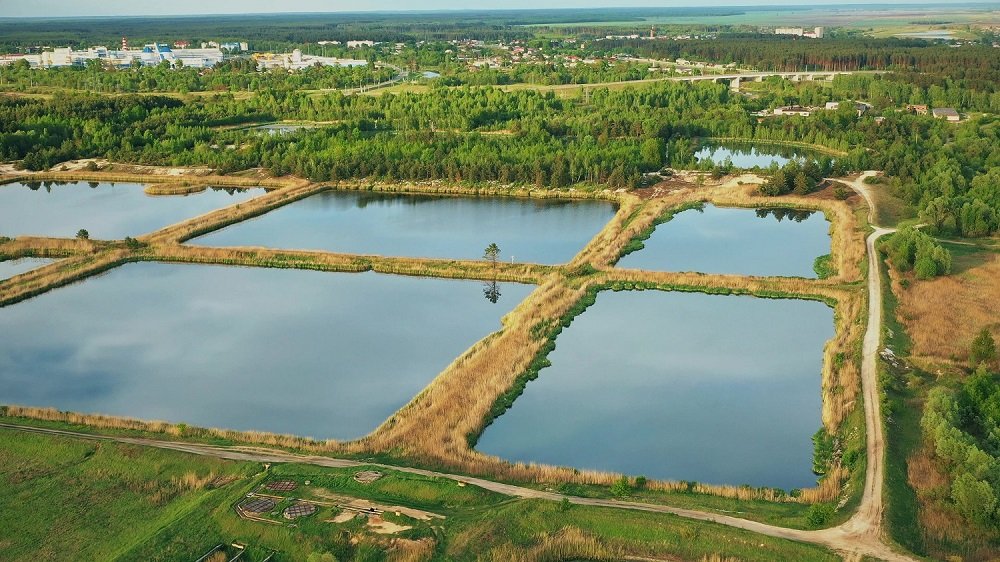
Nearly 900 acres were annexed along Grand Prairie's southern boundary in 2025 for a master-planned community, and every acre of that ground will eventually shed more water than it does today. Roofs, streets and driveways do not soak rain into the soil the way pasture does, so the same storm produces a faster, larger flow to the creek downstream. Detention and retention ponds are how a development gives that water back at a measured pace, and they are often the first earthwork a site builds and the last thing an inspector accepts.
A detention pond holds stormwater temporarily and releases it through an outlet structure at a controlled rate. A retention pond keeps a permanent pool or infiltrates water into the ground. We excavate, shape, line and finish both kinds, build the concrete outlet structures, headwalls and spillways, and stabilize the slopes so a basin that works on paper works in the first big rain.
What building a pond actually involves
The first step is excavation to the volume the engineer calculated, which means precise cut depth and side slopes. Soil from the pond is usually reused as fill elsewhere on the site, so the earthwork balance is tied to the grading plan. We shape the bottom to drain toward the outlet, build low-flow channels where the plan requires them and construct the outlet control structure that governs how fast water leaves.
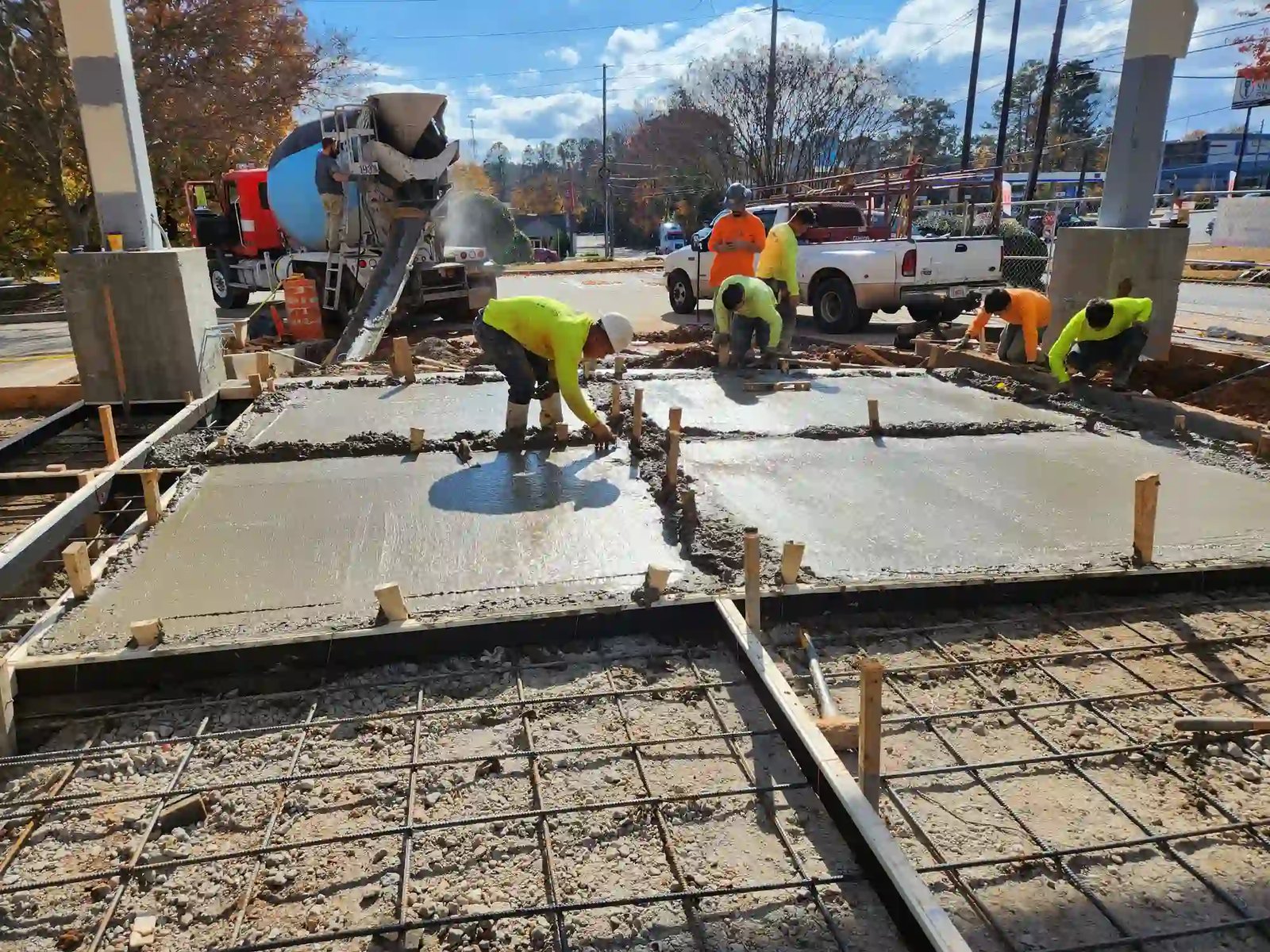
Outlet structures are concrete boxes with orifices and weirs set to precise elevations, and the emergency spillway is shaped and armored for the day the pond overflows. Slopes are stabilized with grass, turf reinforcement or riprap, depending on the design, and inlets from the storm system are protected with aprons and energy dissipation. The culverts and headwalls crews we coordinate pour those inlet and outlet details.
How rainfall and land growth shape basin demand
McKinney, about 32 miles north of Dallas, is described as having average annual precipitation of 41.01 inches with May the wettest month. That spring peak lands just as new subdivisions and business parks are being graded, which means a basin has to be functional before the wet season or the contractor must manage a muddy, erodible site. The more rain a region gets in a short period, the larger the detention volume per acre that local rules require.
Industrial growth adds its own demand. In Pearland, a 25-acre master-planned industrial campus with more than 250,000 square feet across four buildings was reported under development near Beltway 8 and State Highway 288, and campuses of that size need a basin sized to their roof and truck court areas. Sites in Grand Prairie and McKinney face similar pressure as farmland becomes paved ground, and the basin footprint competes with building area for land.
Soil, groundwater and the pond bottom
The soil decides how a pond behaves. In clay, a detention pond holds water, which can be an advantage for a permanent pool and a problem for a dry basin that is supposed to drain between storms. In sandy soil, a basin drains quickly, but it can also lose water through the bottom and sidewalls, and groundwater can rise into it. The geotechnical report should tell us the permeability and the water table, because both change the design of the pond bottom and the amount of dewatering during construction.
Slope stability is the second concern. Cut slopes in clay can slough after repeated wetting and drying, and steep side slopes cause maintenance trouble even when they stand. We build to the slope ratios on the plans and recommend a bench or flatter slope where the soil suggests trouble. Where we encounter rock, we coordinate with the engineer on blasting or ripping, and on the disposal of the spoil.
Volume, haul and the outlet structure
Pond cost is mostly earthwork, and earthwork cost is mostly about what happens to the dirt. If the site can use all the excavated material as fill, a pond is a sound investment; if the dirt must be hauled off, trucking dominates the cost. A pond that supplies fill for the building pad can cost far less than the same pond on a site with no fill demand. We help owners balance cut and fill so the pond and the pad are designed as one earthwork plan.
Outlet structures, spillways and slope protection are the second cost group. Lining and erosion control also add expense, particularly where the pond must hold a permanent pool. Maintenance access, a fence if required, and landscaping at the end are other items we see left out of early budgets. Getting these in the original estimate avoids a gap between the engineer's number and the actual bid.
Build it early, protect it from silt
We usually build the detention pond early in the project, because it can double as a sediment basin during construction. Silt-laden runoff from the graded site flows into it, and the basin traps sediment before water reaches the creek. At the end of construction, we clean the basin of accumulated silt, regrade to the final bottom elevation and finish the slopes, which keeps the pond from silting up before the owner takes it over.
Compaction of the pond embankment matters when the basin is formed by a berm. A berm that is placed in thin lifts at the right moisture holds water. A berm that is dumped and tracked will leak or fail. We test compaction and keep the records, and we coordinate any trench through the berm for an outlet pipe with the engineer, since that is where seepage most often starts.
Pond work fits ahead of everything else
On most sites the pond has to be at least rough-graded before pad construction begins, because the storm lines drain to it and the grade of the entire site depends on it. That puts the pond first or very close to first in the schedule. Weather is the main schedule risk: a pond bottom in clay in the wet season can stay unworkable for days, and a hot dry period can leave the compaction surface too dry to work properly.
We schedule outlet structures and pipe work so they are done before the first big rain can fill the pond and block access. Final acceptance often waits on grass cover or stabilization, which depends on the growing season, so we plan seeding or sod with the weather in mind. Delays in stabilization can hold up the final inspection on an otherwise completed project.
Work that depends on the pond
The pond is the end point of the drainage system we build in the storm drain installation scope, and its grade fixes the pipe elevations feeding it. It is also tied to mass grading, because the excavated volume and the pad fill balance each other, and to the paving and truck court slopes that direct water toward the inlets.
For homebuilders and multifamily developers, the basin is often an amenity as well as infrastructure, so the finish and the landscaping carry extra weight. For industrial owners, it is one more part of the site that must pass inspection and stay maintainable for years.
Size the basin with the grading plan
Send the drainage report and the grading plan and we will compare the pond volume to the site balance before the earthwork is priced.
Common Questions
What is the difference between a detention pond and a retention pond?
A detention pond is meant to be dry between storms, holding water temporarily and releasing it at a controlled rate. A retention pond holds a permanent pool or infiltrates water into the ground. The plans specify which, and the construction details differ for the bottom, the outlet and the slopes.
Can a pond be built before the rest of the site?
Yes, and it often is. Early construction lets the pond serve as a sediment basin during site work. We rough-build it first, then finish it at the end of the job so silt that collected is removed before the owner accepts it.
How are pond slopes stabilized?
Common methods include seeding with erosion matting, sod, turf reinforcement mats and riprap at inlets and outlets. The plans choose the method based on slope steepness and flow velocity. In dry areas, irrigation may be needed to establish grass.
What are the most common reasons a pond fails inspection?
Wrong outlet elevations, slopes steeper than shown, unstabilized banks and silt left in the bottom are the usual issues. Surveying the as-built outlet and bottom before the inspector arrives catches most of them.
Does the pond need a fence or access road?
That depends on the owner and the local rules. Many require a maintenance access path and some require a fence if the side slopes are steep or the pool is deep. We include these items in our proposal when the plans show them.