
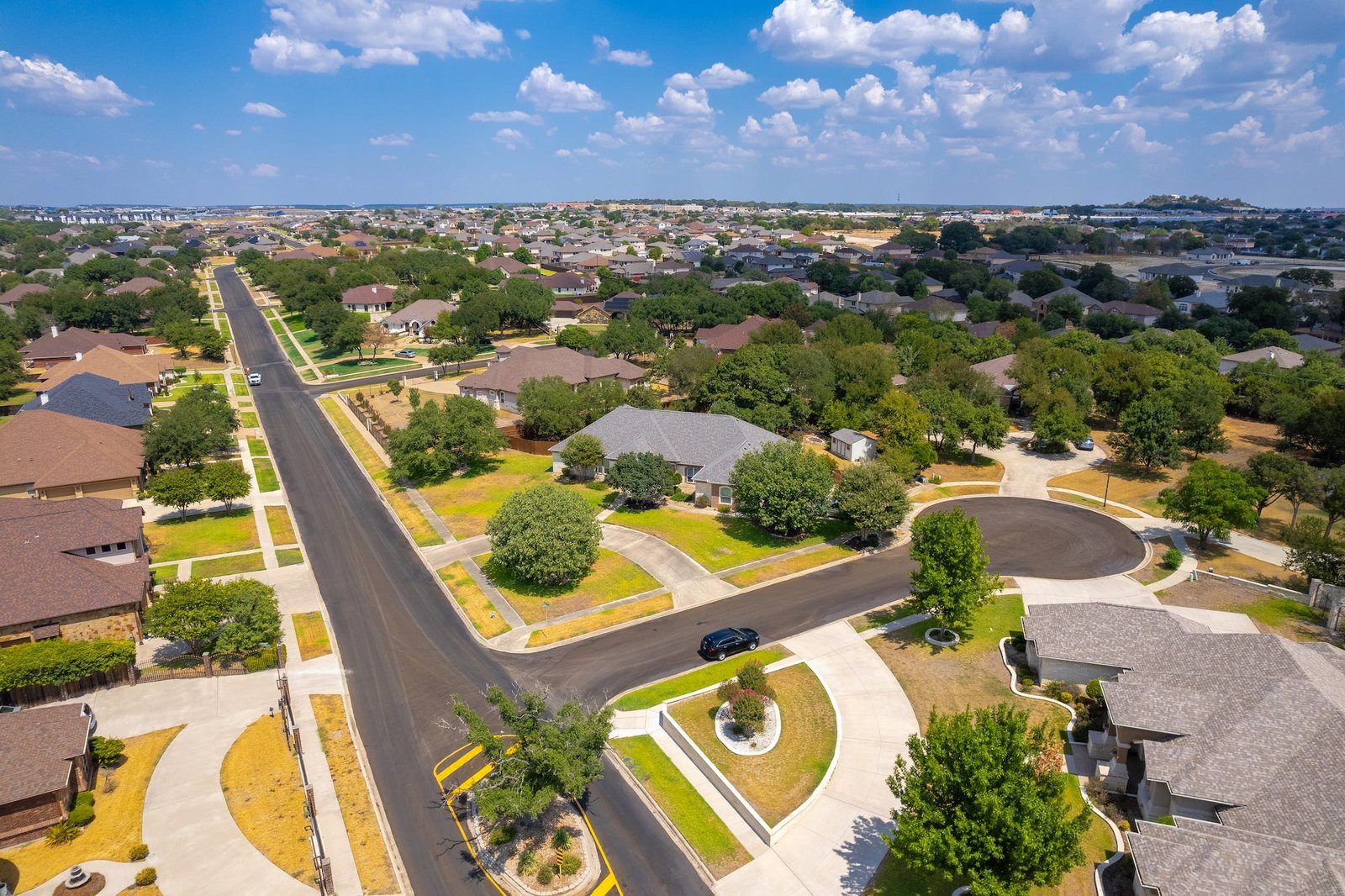

Anyone building near the Fort Hood main gate has to think about traffic first and concrete second, and we plan both together. Our trade partners build foundations, flatwork, paving and underground utilities for school districts, college campuses, municipal owners and developers in Killeen, and we price the work with the road network in mind: the Central Texas Expressway (Interstate 14 and U.S. 190), Business Loop 190, State Highway 195 and Spur 172 all lead toward the post.
The largest employer in town is the military installation, with 32,000 people reported in the city's 2024 annual financial report, followed by Killeen ISD at 6,800 and the Civilian Personnel Office at 6,200. Central Texas College and the City of Killeen add more. When the largest employers are public or institutional, the buyers are school boards, the college, the city and the developers who build housing and retail around them, and public work is bid on paper. We write clear proposals with unit costs for the items most likely to change.
We read the geotechnical report before we submit a number, because pad preparation in central Texas is where most surprises begin.
Pads, paving and pipe
We handle the sequence from clearing and mass grading through trenching, forming, reinforcing and placing. A school addition, for example, needs a clean building pad, parking areas, bus lanes and sidewalks, and a storm drain system that moves water away from the new work. We build those in an order that lets the buildings start early, with paving following the roof-in rather than interrupting it.
For municipal owners, sidewalks and flatwork, curb and gutter and ADA ramps are common packages. They look simple, but the details decide whether a route passes inspection, so we form them carefully and check slopes before the pour rather than after.
Air and road access
Killeen Regional Airport has commercial passenger flights and sits on the former Robert Gray Army Airfield at West Fort Hood, while Skylark Field is a small regional airfield. Airfield pavement is a specialty, but landside work around a terminal is routine for us: parking, curbs, sidewalks and drainage that must be built while flights continue. Interstate 35 is accessible in Belton, 16 miles east of Killeen's center, which matters for ready-mix and aggregate deliveries and for owners who need quick truck access to the larger corridor.
Developers of retail pads and retail shopping centers along the expressway want fast mobilization and clean, well-drained parking lots, and we price those as unit rates per square foot so the comparison is easy.
Permits, inspections and public bidding
Cities in Texas can adopt local amendments to the commercial building code by ordinance, so we confirm what Killeen has adopted before we sequence inspections. We do not guess; we ask the building department and the design engineer, then plan the pour schedule around required inspections of forms, rebar and subgrade.
On government and school jobs, we prepare the bonds, insurance certificates and submittals that public owners require, and we keep daily records of quantities and test results so pay applications go through without back and forth. The municipal and public works crews we coordinate are used to the paperwork.
Working near a military post
The post, renamed Fort Cavazos in May 2023 and designated Fort Hood again in June 2025, is the headquarters of III Armored Corps; its main business area is in Bell County and its training area is in Coryell County. Projects near the post often involve access control, badge requirements or traffic limits we need to learn before the first truck arrives. We ask early whether the drivers and crews we coordinate need credentials, and we schedule deliveries to avoid peak commuter times at the gates.
What we offer is simple: we know how to schedule around controlled access, we ask the right questions before we bid and we keep the access plan in writing so every driver knows the route.
Where Killeen money goes
For public and institutional owners, the cost conversation usually centers on three things. Pad preparation comes first, because the type of fill, the depth of any lime treatment and the amount of undercut all depend on what the borings show. We carry those items as unit prices so a change in the field is a quantity adjustment, not a dispute. Utilities come second: long runs of storm and sanitary pipe on a campus site can cost more than the building slab, and depth, rock and dewatering drive the number.
The third driver is phasing. A school that must open in August has a fixed finish line, and the paving, sidewalks and ADA routes that complete the site tend to happen last, when the weather is hottest and the schedule is tightest. We plan concrete placement for morning hours, reserve ready-mix capacity early and keep curing supplies on site so that a late start does not turn into a quality problem.
Hot, dry and sometimes stormy
Central Texas summers drive evaporation, and a flatwork pour that loses moisture quickly will craze or crack. We use fog or evaporation retardant when conditions require it, start before sunrise on large placements and cure with compound or wet coverings as soon as the surface can take it. In spring, thunderstorms arrive fast, so we track forecasts, keep plastic sheeting on hand and are prepared to stop a pour and cut it at a planned joint if the sky turns.
Winter work is rarely a problem here, but a hard freeze can still catch a slab that has not gained strength, so we cover fresh concrete when the forecast demands it and keep the thermometer records that inspectors expect.
Sister markets
Many Killeen owners also have projects in Temple, 27 miles east, or in Georgetown to the south along Interstate 35. We mobilize across these cities and can keep a single superintendent over a multi-site program.
Send us your Killeen plans
Share the drawings, the soil report and your bid date. We will return a clear scope with separate lines for dirt, pipe and concrete.
Common Questions
Does the Fort Hood gate traffic affect your scheduling?
Yes, we plan deliveries around peak traffic on the Central Texas Expressway and the gate approaches. Concrete trucks have a limited window before the mix stiffens, so we choose haul routes and pour times that avoid the heaviest congestion.
What kinds of owners do you work for in Killeen?
Mostly school districts, colleges, municipal owners, retail and housing developers, and the general contractors working for them. Public jobs follow bidding rules, and private jobs usually allow more flexible negotiation.
Can you prepare a pad on central Texas clay without surprises?
We cannot promise there will be none, but we can reduce them. We read the borings, test moisture and density during the work and propose lime treatment or select fill when the engineer calls for it. Unit prices for over-excavation protect you if the ground proves worse than expected.
Do you build ADA ramps and accessible routes?
Yes. We form them to the specified slopes, check running and cross slopes before placing and verify landings and detectable warnings. A rework on one ramp costs far more than careful formwork.