
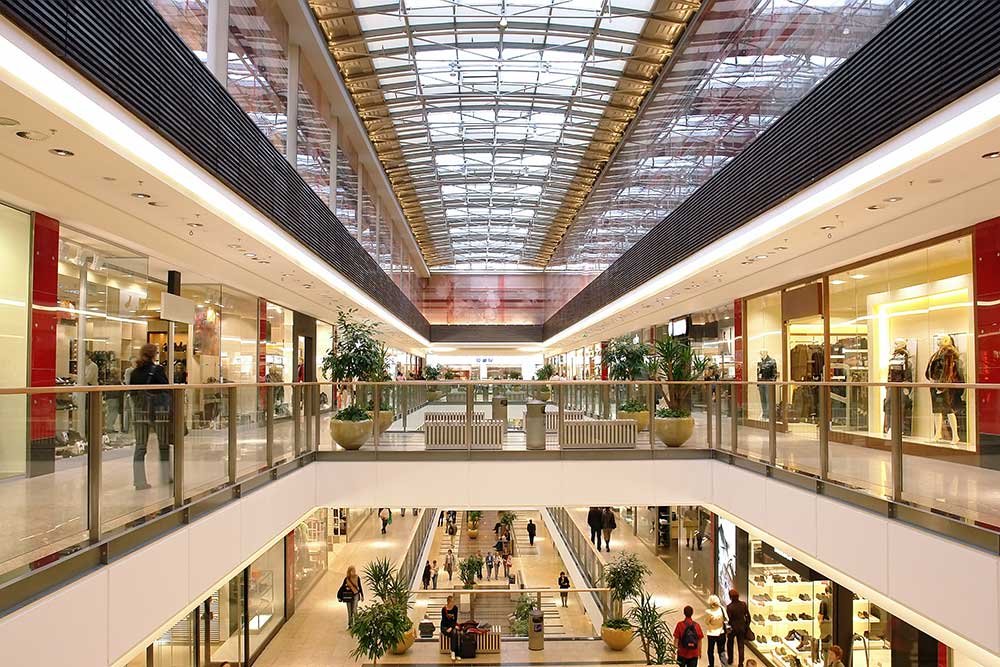

Customers never see the subgrade, but they notice every puddle in a parking field, every cracked apron at a drive-thru and every curb that chews a tire. A retail center is mostly pavement with a few buildings on it, and the money a developer spends on concrete and site work is often larger than the money spent on the shells. That is the right way to think about it: the center is a parking lot with a storm system, and the stores are tenants of that system.
We build the concrete, utility and grading package for strip centers, power centers, outparcel pads and open-air lifestyle retail across Texas. The job usually starts with a raw or cleared parcel, a short entitlement window and a tenant who has already signed a rent commencement date, so the sequence has to be planned in a way that releases pads early and keeps trucks, shoppers and construction traffic from colliding.
What Texas retail ground has to survive
Texas led the country with 878 hail events in 2024, and the Insurance Council of Texas puts statewide insured losses above $47 billion for the year. Hail does its damage to roofs and vehicles, but it also drives the way retail sites are drained, because intense rain often arrives with it. A center that floods a drive aisle after a storm loses sales the same day, and the cause is almost always a storm line, inlet or detention outfall that was undersized or poorly built.
Older retail in Texas also gives us a reference for how long pavement ought to last. Firewheel Town Center in Garland, a main street style outdoor center, opened in October 2005 with over 100 businesses, and Vista Ridge Mall at I-35E and FM 3040 in Lewisville opened in 1989. Properties like those get repaved, restriped and re-graded in cycles, and the quality of the original parking lot concrete and subgrade decides how painful those cycles are.
Pads, aprons and the paving between them
Our work begins with mass grading to bring the site to pad and pavement subgrade, then fine grading and compaction in the drive aisles. Retail pads are generally slab on grade, but the details change by tenant. A restaurant pad needs grease interceptor vaults and trench drains, a grocery pad wants heavy dock aprons and cart corrals, and a drive-thru lane needs a reinforced section for stopping loads that a plain parking stall never sees.
Between the buildings we place curb and gutter, accessible routes and sidewalks, and we use concrete rather than asphalt where trash enclosures, fuel and delivery trucks, and bus stops will do the most damage. Tolerances matter at the curb line, because a curb poured an inch high or low will pond water against a storefront.
Storm systems and flood memory
Parking fields shed water in huge volumes, so the storm system is the center’s most important buried asset. We install storm drain lines, inlets, and outfalls to grade and verify slopes with a laser before bedding is closed. Where a site discharges to a creek or detention pond, we coordinate with the civil engineer on inlet protection and erosion controls so the permit stays clean during construction.
Texas cities have long memories about flooding. After a 2006 storm dropped about a year of rain on El Paso in two days, causing more than $200 million in damage and more than $100 million to the city’s stormwater system, the city council set up a stormwater utility in 2008. Retail owners in cities with that kind of history are often asked to detain more water on site than they expected, and we plan detention and retention basins early so they do not eat parking that the lease requires.
Phasing for tenant openings
A center rarely opens all at once. Major-tenant pads usually turn over first, inline shops follow, and outparcels trail behind with their own tenants and timing. We phase the earthwork and paving so the front of the site is finished and clean while the back is still being built, and we keep construction traffic on temporary haul routes rather than the permanent pavement customers will use.
In Round Rock, an outlet center and a corporate headquarters share a city that has grown around the I-35 and State Highway 45 corridors, and in Austin’s northern suburbs the pace of retail pad delivery can set the schedule for everyone else on the block. We pour sidewalks and flatwork in the last weeks before opening, not the first, so the work stays clean through the fit-out.
Where retail budgets are won
The biggest levers are pavement section, subgrade treatment and how much dirt moves. Choosing a thicker concrete section for dumpster pads and drive-thru lanes while leaving the rest of the parking field to a thinner pavement often saves money without hurting performance. Hauling fill in or out can change a budget quickly, so we balance the cut and fill on site whenever the grading plan allows.
Joint layout is another quiet cost driver. Wide, poorly planned panels crack, and cracked panels need saw cuts and patches that never look right. For commercial developers who want a center that still looks clean after a decade of carts and delivery trucks, a few hours of joint planning before the first pour is worth more than any finish treatment. Clinic pads in the same center follow the rules we describe for a medical office building, and storage outparcels have their own needs, covered under self-storage facilities.
Developing a retail center in Texas?
Send us the civil set and geotechnical report and we will price the grading, storm, utility and paving as one package, with phasing that matches your tenant openings. For nearby markets you can also read about work in Garland and Round Rock.
Common Questions
Should drive aisles be concrete or asphalt?
Concrete lasts longer and holds up under heavy trucks, but asphalt costs less up front and is easier to patch. Many centers use concrete at the points of heaviest stress, such as dumpster pads, loading zones and drive-thru lanes, and asphalt elsewhere. We price both so the owner can choose with the full lifecycle in view.
How do you keep pavement from ponding?
We set subgrade and finish grades with laser control, check cross-slopes before pouring and confirm inlet elevations against the plans. Even a half-inch low spot can hold water in a parking field, so we correct those while the form is still in place instead of after the concrete has cured.
What do you need to start on a new center?
The civil plans, the geotechnical report, the utility letters and the target dates for each tenant. With those in hand we can sequence earthwork, utilities, pads and paving, and flag any conflicts between the grading plan and the soil recommendations before we mobilize.
Do you build the building pads or only the paving?
Both. We pour slab-on-grade pads for the shell buildings and the paving around them, and we install the water, sewer, fire and electrical lines that serve each tenant. That lets us coordinate subgrade preparation and utility timing across the whole site.
How does a hail-prone market change site work?
Hail itself affects roofs and vehicles, not paving, but the heavy rain that often comes with it tests the storm system. We install storm lines, inlets and detention outfalls with extra care for grade and bedding, because those are the first systems to show a flaw during a big Texas storm.