
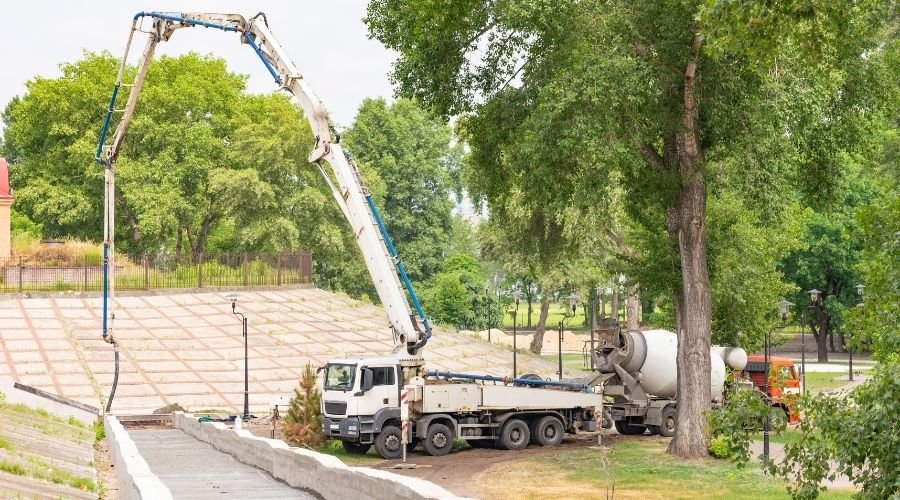

A concrete pump is only as useful as the truck line behind it. The boom can reach any corner of a footing, but if the next mixer is forty minutes out on a hot afternoon, the load in the hopper is already stiffening and the crew is deciding whether to reject it. Pumping and placement is the part of a pour where logistics and chemistry meet, and we plan it as a single problem: what mix, how far, how high, at what rate, and with what backup if a machine goes down.
We pump and place concrete for slabs, footings, grade beams, tilt panel bases, elevated decks and the heavy foundations that go under process equipment, on sites across Texas. Some of those sites are tight infill lots where the boom has to clear overhead power lines, and some are enormous campuses where the challenge is keeping a hundred-truck day moving without queueing at the gate. The method changes, but the discipline is the same: the pour is decided days before the first truck arrives.
What decides the pump and the mix
The first question is access. A truck-mounted boom pump needs firm ground for its outriggers, a clear envelope for the boom and room for mixers to stage without blocking each other. On fresh pads and utility corridors we check bearing and haul-road condition before committing a machine, because an outrigger punching through soft clay ends a pour faster than any mix problem. Where the building footprint is too large or too far from the road, a line pump with steel and flexible hose takes over, and the pumping distance changes how the mix has to behave.
The mix is the second question. Pumpability depends on paste content, aggregate gradation and slump, and on what admixtures the engineer will accept. A mix that places well in a mild morning may bleed or segregate in a long line, and the reverse is true in heat, when a stiff mix will grab the pipe walls. We confirm the approved mix design, including water reducers and retarders, before pump day and settle the target slump at the pump and at the point of placement. Those can be different numbers, and everyone on the crew should know which one governs.
How we run the pour
We stage the pour on paper first: truck spacing, ticket checks, washout location, the order of placement strips and who is calling the pump operator. The line is primed with a grout slurry that is never placed in the work, and the operator and the placing foreman agree on hand signals or radio before the first stroke. Placement then moves in a continuous front so each new lift joins the last while it is still workable, which is how cold joints are avoided in large slabs and thick pads.
On the finishing side, the pump rate has to match the crew. If concrete arrives faster than screeding and troweling can follow, the surface sits too long and the result is a slab that sets before it is finished. We would sooner slow the pump than rush the finish. When the work is a deck or an elevated section, we pair pumping with the formwork and reinforcement crews, such as those on cast-in-place structural concrete, so the pour sequence follows the embed inspections and not the other way around.
Truck counts, batch plants and the clock
Texas pours are won on the ready-mix haul. Distance from the batch plant to the site sets how much working time a load has left on arrival, and in summer that time can be short. We ask the supplier for plant capacity and a second plant for the same mix before a large pour, and on very big days we split deliveries between plants so one breakdown cannot stop the work. Large new campuses show why this matters: a reported $30 billion wafer fabrication plant near Sherman and an announced 1.2 million square foot data center campus in northeast El Paso both imply sustained placement volumes that a single supplier may not carry alone.
For those scales we plan multiple pump setups, defined pour windows and written contingency for weather. Night starts are common in hot weather so the heaviest placements finish before midday, and a coordinated plan with the engineer on hold points keeps inspections from becoming bottlenecks. When the work is a floor, the same planning links directly to slab on grade sequencing, because the finishing schedule determines how many hours of pumping the day can use.
Boom, line and overhead hazards
Pumping brings specific hazards that deserve a pre-pour talk every time. Booms contact energized lines, hose whips when a blockage releases, outriggers fail on weak ground, and a truck driver backing blind near workers is always a risk. We locate overhead lines before setup, keep a spotter on the boom side, and keep clear zones around the hose end and the pump discharge. Line cleanout is done by the operator under a defined procedure, with the crew moved away from the outlet.
Concrete is also caustic. Crews working screeds and finishers wear proper boots, gloves and eye protection, and washout is contained so slurry does not reach storm inlets or open ground. On public sites and near live traffic, we add traffic control and truck marshals so mixers and the public stay separate. The aim is a pour that ends with the same crew count that began it, and a site that is clean enough to hand over without cleanup disputes.
What moves the price of pumping
Pump cost is driven by machine size, boom reach, minimum hours, setup and cleanup time, and the number of moves between placement points. A single well-placed setup is cheaper than three small relocations, so we look at where the boom can sit and what it can reach. Standby time is the quiet cost: when trucks run late or a hold-point inspection stalls, the pump bills while idle. Resolving those dependencies in the schedule is cheaper than paying for them on pour day.
Mix selection also moves cost. Special admixtures, supplementary cementitious materials and long-haul retarders add to the per-yard price but can save much more by extending working time and avoiding rejected loads. We lay out those tradeoffs early for general contractors, developers and industrial owners, and we offer pricing for placement alone or as part of a combined commercial concrete package where one crew owns the whole sequence.
Plan the pour with us
Send us the drawings, the mix design and the pour dates, and we will tell you what machine, crew and truck plan we would use. Early planning is usually the difference between a clean placement and an expensive stop.
Common Questions
How far can a concrete pump reach on a typical Texas job?
Truck-mounted boom pumps commonly reach somewhere between roughly 100 and over 150 feet of boom, depending on the machine, while line pumps can move concrete much farther through pipe and hose. The honest answer depends on the mix, the height and the rate. We choose the machine after seeing the plans, the access and the batch plant location, and we avoid stretching a pump past what the mix can handle.
Why does a pour sometimes stop for a cold joint, and how do you prevent it?
A cold joint forms when fresh concrete is placed against a lift that has already begun to set. It usually comes from truck gaps, a pump breakdown or placement outrunning the finishing crew. We prevent it with truck spacing, a backup pump when the pour size justifies it, a retarder where heat shortens working time and placement strips sized to the crew.
What should an owner or general contractor have ready before pump day?
Firm access for the pump and mixers, an approved mix design, completed formwork and reinforcement inspections, clear embed locations and a washout area. If power lines or underground utilities sit near the setup, we want them identified in advance. The most common delay is an inspection that was not scheduled, so we ask for hold points to be booked before the pour date.
Do you pump concrete for work other contractors are building?
Yes. We take placement scopes for general contractors and CM firms and developers on foundations, slabs and structural pours, and we coordinate with their forming and reinforcement crews. We prefer to be involved early enough to review the pour plan, because the best results come when pumping is planned with the mix, the finishing and the inspection schedule together.
How does weather change pumping in Texas?
Heat shortens working time and wind dries the surface, so we use retarders, shaded or chilled mix components where needed, and early starts. Rain brings its own plan: protection for fresh surfaces, drainage for the pump setup and a decision on whether to stop. We watch the forecast through the pour window and decide with the engineer before the first truck rolls.