
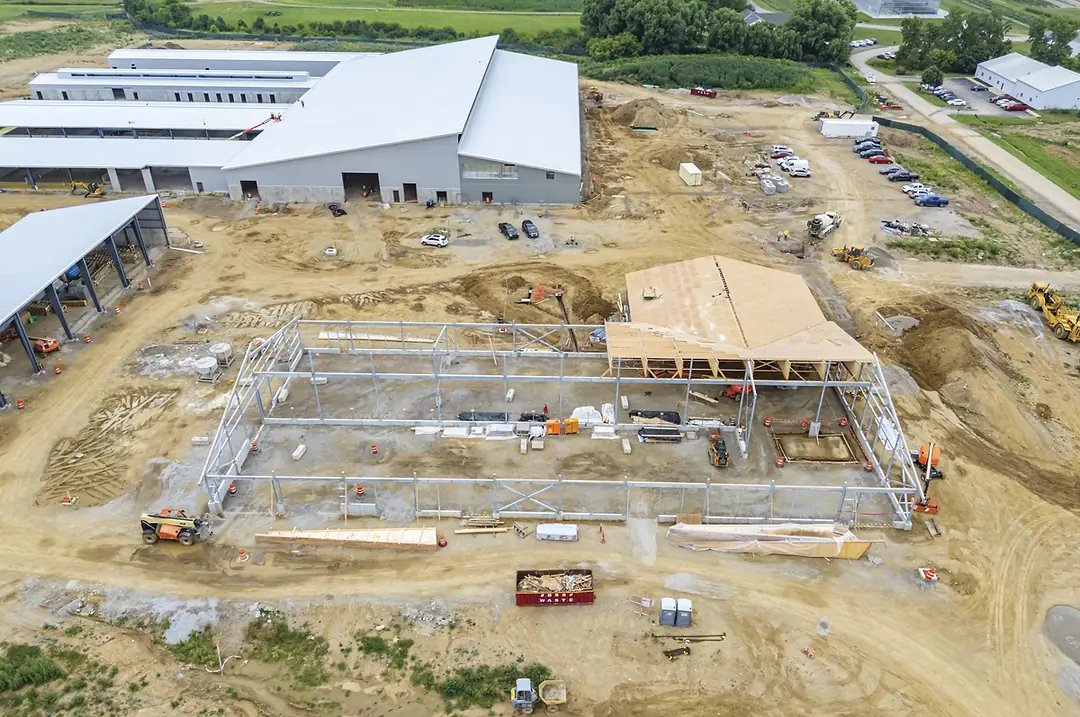

Cattle, milk and wash water all end up on concrete eventually, and what that concrete is made of, how it is sloped and how it is cured decide whether a dairy, feedyard or processing plant stays clean and legal. Agriculture in Texas runs from blackland farm country to the High Plains, and the buildings and pads that serve it face animal traffic, manure, acids, hot summers and winds that can carry dust for miles.
We build the hard surfaces and earthwork for those operations: milking parlor floors and holding pens, feed alleys and bunker pads, silage slabs, commodity storage floors, truck scale foundations, wash bays, lagoons and basins, and the roads and utilities that link them. We also work with food processors who buy from the farm gate and need washdown-ready floors inside their plants.
The sections below describe how we plan for agricultural conditions, how the work is priced and where we serve.
Concrete for animals, equipment and washdown
Floors in animal areas are not general-purpose slabs. A milking parlor or a holding pen needs positive drainage to a collection point, a surface texture that gives cows traction without wearing hooves, and joints sealed against liquids. We establish slopes with laser control, specify mix designs with low permeability, and cure the surface carefully because early drying leaves a weak top layer that the washdown water will find.
Feed and commodity pads face wheel loads from loaders and trucks, so they are thicker and use more reinforcement than a parking lot. Acidic silage attacks the paste in concrete, and we discuss sealers or sacrificial layers with the owner when silage pits are in the design. Our concrete paving and trench drains and concrete drainage pages explain the same techniques in other settings.
Weather, drought and wind on the plains
Heat and wind dry fresh concrete quickly. The National Weather Service reported a record 83 mph wind gust at the Amarillo airport on March 14, 2025, with blowing dust cutting visibility to less than a quarter mile, so a High Plains pour can be at risk from rapid moisture loss and dust contamination. We use windbreaks, evaporation retarders, early placements and prompt curing compound or wet curing to protect the surface.
Water supply is a planning issue as well. Wichita Falls went through a persistent drought from 2010 to 2013 and recorded 100 days of 100 degrees or higher in 2011, a reminder that producers may face water restrictions in the middle of construction. We coordinate mix water and dust control with the owner so the project does not depend on water the farm cannot spare. In the blackland region east of Temple, a rich farming area, clay soils swell and shrink, so floor slabs and pads for barns and equipment buildings need subgrade preparation as careful as a commercial site.
From barn floors to lagoons and roads
The usual scope includes site clearing and grading, access roads and truck turnarounds, building pads, concrete floors and aprons, feed bunks, commodity storage floors, scale pads, retention basins and lagoons, culverts, and water and electric trenches. We build lagoons and basins to the engineer's design, compact clay liners in lifts, and test them as specified.
Where the farm connects to a processor, we also build tie-ins for truck wash areas and wastewater lines, equipment pads and the plant's paved yard. Some operations include small substations or irrigation pump foundations, which we coordinate with the same trade partners. The food and beverage processing page describes those plant floors.
What drives agricultural construction cost
Distance is again the large variable. Rural sites are far from ready-mix plants, aggregates and inspectors, so haul time, truck count and retarders weigh on the price. Soil is second: poor drainage, shallow rock or expansive clay changes the pad design and the amount of import fill needed. We offer unit prices for soil treatment and rock so the owner pays for what we find.
Owners should also weigh capital against operating cost, and we show that comparison with a simple table of first cost, expected cleaning labor and likely repair intervals for each floor option. A parlor that is sloped and sealed correctly saves labor every day it is washed down, while a cheaper floor that ponds water costs more each month. A thicker, better-cured floor with sealed joints costs more at first and less over the life of the building. Large new food manufacturing investments show how big this sector is becoming: an 850,000 square foot facility in East Lubbock described as the largest capital investment in the city's history, at about $1 billion and more than 600 jobs, and a $10 million, 13,000 square foot facility next to a meat plant in Amarillo adding 25 to 30 jobs. Producers who supply those plants need to build to their standards.
Where agriculture drives our work
We serve the High Plains around Lubbock and Amarillo, the blackland farm country in Central Texas, North Texas ranch and dairy counties, East Texas poultry country and the Gulf coastal plain. Each region has its own soils, water and haul distance, and the plan changes accordingly. On the plains we plan for wind, caliche and long hauls; in the blackland belt we plan for clay and rain; near the coast we plan for a high water table and storm surge. Before any crew mobilizes we walk the site with the owner, locate buried lines, agree on gates and animal handling, and settle where spoil, topsoil and washdown water will go.
Many farm-related projects tie into other infrastructure, such as grain terminals and rail loaders, which we address with logistics and warehouse developers, and rural electric lines, which link to utilities and energy companies. Our industrial and manufacturing owners page covers plant owners that buy from the farm gate.
Describe the operation and the pad
Tell us the herd or throughput, the building layout and your timeline. We will visit the site, review drainage and return a unit-priced proposal.
Common Questions
What type of concrete is best for a milking parlor?
A dense, low-permeability mix with proper air entrainment where freezing is a factor, a broom or textured finish for traction, and sealed joints. The engineer or equipment vendor specifies the details, and we follow them closely, including slope to drains and curb heights.
Can you build lagoons and basins?
Yes. We excavate to the engineer's grades, compact liner soils in lifts, test for density and permeability as specified, and shape the embankments. Permits and design come from the owner's engineer and the environmental agency.
How do you pour in the wind?
We watch the forecast, pour in the cooler and calmer hours, use windbreaks and evaporation retarders, and apply curing compound immediately after finishing. If the conditions are outside our limits, we move the pour. A pour lost to wind can cost more than a day of delay.
Do you work around cattle?
We work with the owner on gates, hours and handling plans. Animal movement, feed schedules and milking times set the windows. Crews follow biosecurity rules, and we keep gates closed and equipment clean.