

Drought cracked the soil, a tornado tested every wall, and a river has flooded in the past, so builders in Wichita Falls learn to respect the ground and the weather. We bring that respect to concrete, grading and underground utility work for owners around the city: owners near the air base, hospital and university projects, school districts and commercial developers. The highways that serve them are Interstate 44 (which ends here at its western terminus) and U.S. Highways 287, 277, 281 and 82.
The largest employer is Sheppard Air Force Base with 7,222 employees, followed by the school district at 2,378, a regional health care system at 2,100 and Midwestern State University at 1,276. A base, a hospital system, a university and a school district together produce steady demand for facility upgrades, parking, drainage and utility replacement. We build those, and we do not claim any of them as clients.
As always, we start with the geotechnical report and keep earthwork, utilities and concrete in separate lines on the proposal.
Drought, heat and the dry-soil problem
From 2010 to 2013 Wichita Falls went through a persistent drought and recorded 100 days of 100 degrees Fahrenheit or higher in 2011. A long dry spell shrinks clay, opens cracks and leaves foundations to deal with swelling when the rain finally returns. A contractor who works here learns to watch soil moisture as closely as anything else.
For concrete, the lesson is that hot-weather placement is routine, not exceptional. We plan retarders, chilled water or ice when mixes require, early starts, shaded curing and fast finishing. For subgrades, we wet and condition soil to uniform moisture before placing, and then protect the pad from drying out again. A slab on a bone-dry subgrade can lose water from the bottom as fast as from the top.
Building for severe weather
An F4 tornado struck the city on April 10, 1979, killing 42 people, injuring about 1,800 and causing roughly $400 million in damage. That memory shapes how owners think. School districts and public agencies ask about shelters, safe rooms and robust structures, and concrete is the usual answer. Reinforced slabs, thickened footings and tie-downs matter, as does careful work at the connection between slab and walls. We follow the engineer's design exactly and keep inspection and test documentation for each placement.
On our own sites, severe weather means a plan: monitor forecasts, secure materials and equipment before storms, and give crews a place to shelter. We never ask a crew to finish a pour in the face of lightning.
Highways and the airport
The western end of Interstate 44 and the four U.S. highways create several approaches to most sites. Wichita Falls Municipal Airport has two daily American Eagle flights to Dallas/Fort Worth, which keeps the city connected for owners and design teams. Truck traffic follows the highways, and we plan haul routes and delivery windows around peak times.
When developers consider the area for flex and light industrial buildings or for retail pads, they look for good access and drainage. We build the paving, the dock aprons and the stormwater features that make those sites work.
Drainage and floodplain awareness
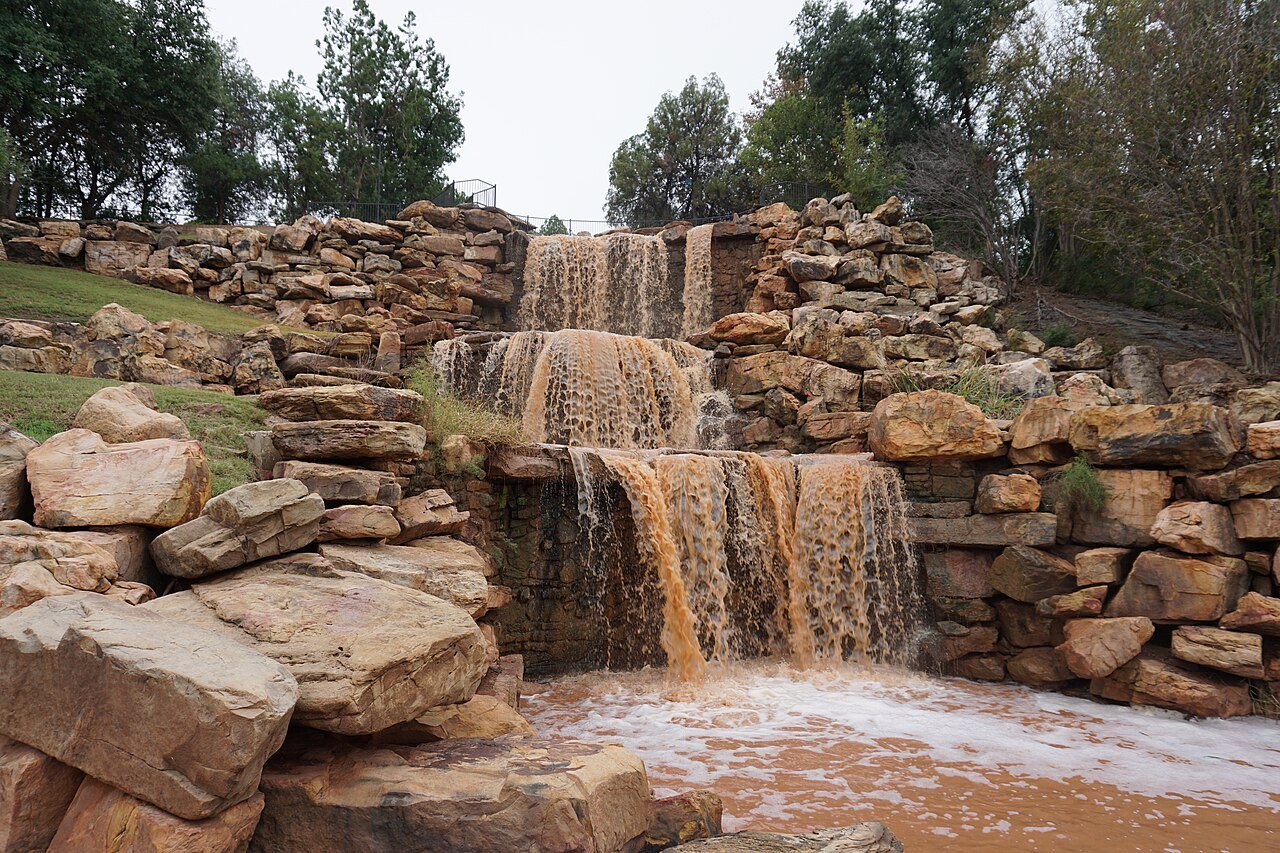
An 1886 flood destroyed the original waterfall on the river for which the city is named. The date is old, but the lesson is current: sites near water need careful drainage and elevation planning. We review floodplain maps with the civil engineer, set pad elevations to the plans and install erosion controls and temporary drainage as soon as clearing starts.
On every site, we try to move water away from the pad. Swales, inlets and outlet structures get built early, storm drain installation is sequenced ahead of paving, and we check that water leaves the site where the plan expects it to.
Hospitals, schools and campus work
Health and education projects share priorities: accessible routes, durable paving, clean drainage and the least possible disruption. Hospital and school projects also tend to have fixed opening dates. We back-plan from the opening and flag early if the sequence looks tight.
For public owners, municipal and public works packages come with bonding, insurance and prevailing procedures that we handle routinely.
What our trade partners build here
Our trade partners clear and grade sites, build pads, trench and backfill water, sewer and storm lines, form and place slabs, and pour sidewalks and flatwork, curb and gutter, and paving. Each step feeds the next, so we keep a single supervisor responsible for the sequence. Utilities go in first, the pad is proof-rolled and approved, and only then do forms and steel go in.
For commercial parcels, we often build the paving and curbs early so that tenants have clean access while buildings are finished. Detailed layouts of joints, ADA routes and drainage are worked out with the owner's engineer before the first form is set.
Ready-mix, rain and the calendar
Ready-mix supply is planned by haul time to the site and by plant capacity on the day. For large placements we reserve trucks a week ahead and agree on a backup plant. We watch the forecast for storms, and we are ready to stop and joint a pour if lightning or hail approaches.
Spring storms and summer heat bracket the construction season, so we give owners schedules with weather allowances built in, and we update them as conditions change.
Cost drivers on North Texas prairie sites
Subgrade preparation is the first driver. Moisture conditioning, lime treatment where specified and select fill can add substantially to the pad cost, so we use unit prices to keep any change transparent. The second is heat and wind: hot-weather measures add labor and material, but they protect the slab. The third is the amount of public-sector documentation, which takes time and is priced into our overhead.
We encourage owners to ask for alternates, such as concrete or asphalt in parking areas, so they can compare lifecycle and first costs.
Neighboring markets
Wichita Falls owners often compare sites with Abilene to the south and with Sherman in the northeast of the state. We cover all three.
Send us your Wichita Falls project
Share the plans, the geotechnical report and your target dates. We will respond with a scope and a plan for the weather.
Common Questions
How do you handle expansive soil after a drought?
By following the geotechnical report and managing moisture. We condition the subgrade to a uniform level before placing, avoid ponding and cure promptly.
Do you build storm shelters and safe rooms?
We build the concrete work to the engineer's design, including reinforced slabs and footings, and we document inspections and tests.
What slows concrete work most in summer here?
Heat and wind. We start early, use retarders and curing aids, and add finishing crews to keep up with a faster set.
Can you coordinate with an air base's access rules?
Yes. We ask in advance about credentials and delivery restrictions and plan around them.