
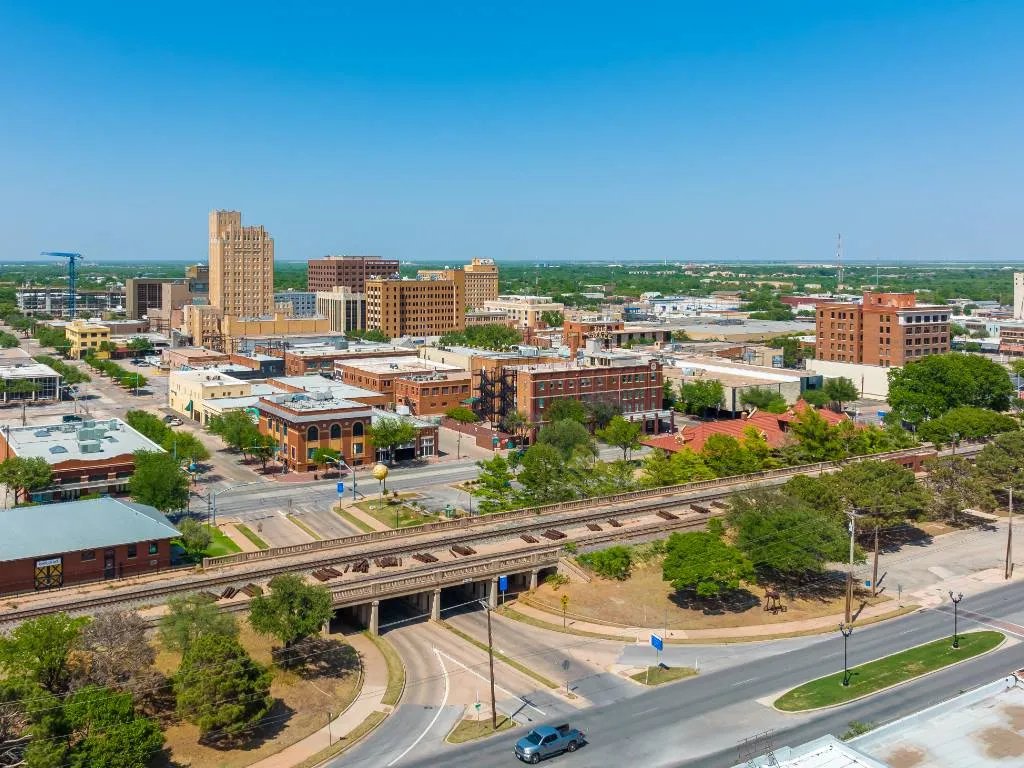

Giant data halls, generator yards and miles of buried power and fiber are changing what a contractor in Abilene is asked to build. We manage equipment pads, building slabs, truck and service roads and heavy duct banks, and we grade and trench the ground around them, coordinating trade partners for earthwork, utilities, forming, reinforcing and concrete placement. West Texas caliche, wind and heat set the terms, and we plan for all three.
Reports describe a set of data center projects in Abilene developed by a joint venture of investors and leased to a large technology company, and one account says the campus has more than 6,400 workers and operates at 1.2 GW of capacity. That second figure comes from a secondary source and should be confirmed with the operators, but even as a rough picture it tells a contractor that the area now has unusually heavy demand for site work, trucking and concrete.
We do not claim any part of those projects. We offer a dependable crew for owners, general contractors and suppliers working in the same market, and a proposal that separates earthwork, utilities and concrete.
Why a data center campus needs more than a building
A data hall is a building, but the campus is a site. It needs flat equipment-room slabs, thick pads for generators, transformers and chillers, concrete-encased duct banks, fire lines, stormwater control and access roads strong enough for heavy delivery trucks. Much of that work happens in the dirt long before the building rises. Our data center site scope covers those items, and the electrical duct banks crews we coordinate can place the underground runs that carry the power.
The pace is the other factor. Large campuses build in phases that overlap, and the contractors who keep up are those with enough crews and equipment to take a package and finish it. We tell owners plainly what we can staff and when.
The air base and the health system
The city's 2024 report puts Dyess Air Force Base, on Abilene's west side, at the top with 8,864 employees, ahead of a health system with 2,896 and the school district with 2,500. Those three suggest the steady civil work that surrounds a military community: housing, retail, clinic expansions, school additions and road improvements. We know the concrete these buildings use, including medical office pads, parking and drainage, and we do not claim to have built for any of the organizations listed.
Near a military base, traffic and access get extra attention, and we ask early about restrictions on deliveries and equipment.
Working caliche and dry ground
West of the clay belt, hard caliche layers can sit close to the surface. They slow trenching, break bits and change how pads are prepared. We review the borings, then choose equipment, rippers or hammers to suit, and we price the extra production openly. The rock and hard ground excavation crews we coordinate handle it.
Dry ground has its own problems. Dust must be controlled, water for compaction has to be hauled, and a subgrade can dry out before concrete is placed. We wet and roll as needed, check moisture and density and keep fresh concrete shielded from wind.
Wind, heat and flatwork
Wind and low humidity strip moisture from a fresh slab quickly, which produces plastic shrinkage cracking. We counter this with windbreaks, fog or evaporation retardant, early morning starts and prompt curing. Summer afternoons are hot enough to shorten set times, so we plan retarders and extra finishing hands.
For the large equipment-room floors that data halls require, flatness and levelness targets are tight. We use laser screeds where the specification calls for them and measure floors after finishing.
Roads, rail and haul routes
Interstate 20 forms a loop along Abilene's northern side between exits 279 and 292, and U.S. 83, U.S. 84 and U.S. 277 also pass through the city, with Loop 322 on the east side. The former Texas and Pacific line, now part of the Union Pacific mainline, divides the city into north and south zones. For deliveries, rail crossings and congested corridors matter, and we plan haul routes that avoid long waits at crossings.
Where a project needs a new driveway to a state highway, a permit and sometimes a traffic study come into play. We help owners understand the sequence and timing.
Packages we can take on
Typical packages in a market like this are mass grading of a campus pad, a utility loop with water, sanitary sewer, fire and storm lines, foundation and slab packages for service buildings, and paving for access roads and parking. We price each as its own scope and can combine them when the owner wants a single point of responsibility. For large pours, concrete pumping and placement is planned ahead so the line is ready when the first truck arrives.
The work also includes smaller items that matter: pits, sumps, bollards, pipe supports and thickened slab edges. They are modest in cost but easy to forget, so we walk the drawings with the general contractor before mobilizing and list them.
Trucks, water and tight pour windows
Large campuses attract heavy traffic, and ready-mix plants nearby can be strained when several projects pour on the same day. We reserve capacity early, agree on batch plant priorities with the supplier and confirm haul routes. For big placements, we start before dawn when the weather and permit rules allow.
Water for compaction and dust control is another planning item in dry country. We arrange sources and trucks in advance, and we keep tank trucks on site during grading so that moisture conditioning never stalls production.
Cost on remote and fast-moving sites
The cost of a fast campus is often schedule. Overtime, additional crews and expedited deliveries cost money but may save more in earlier occupancy. We lay out these trade-offs clearly in the proposal.
Hard ground and long hauls also count. Aggregate and ready-mix come from plants whose distance varies, and we reflect that in unit prices rather than hiding it in a lump sum.
Other West Texas markets
Owners considering Abilene often look at Wichita Falls to the northeast as well, Sherman farther east, and at the broader utilities and energy work across the region. We cover both.
Plan your Abilene project
Send the plans and soil data and tell us your phasing. We will answer with a scope you can check.
Common Questions
Do you build duct banks and equipment pads for large campuses?
Yes. We build concrete-encased duct banks, generator and transformer pads, and chiller pads with the reinforcing and embeds the engineer specifies.
How do you handle caliche?
We read the borings, select the right equipment and price hard ground as a unit item. Surprises are managed through unit rates, not disputes.
Can you keep up with a fast-phased campus?
We commit crews to specific packages, and we say up front how much we can staff. Overlapping phases require good communication, which we support with weekly look-aheads.
How do you protect fresh concrete from West Texas wind?
With windbreaks, evaporation retardant, early starts and immediate curing. The aim is to keep the surface from drying before finishing is complete.