
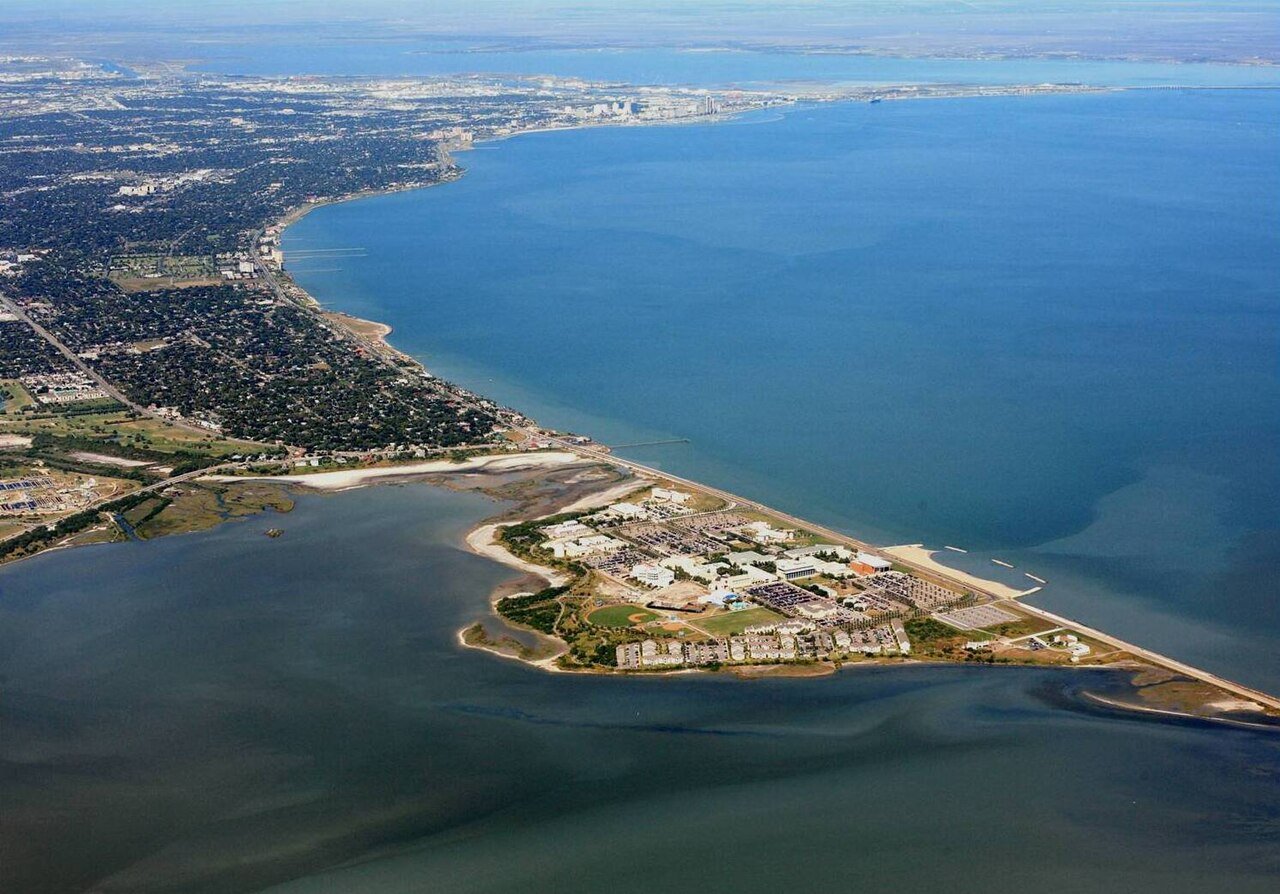

Industrial yards, export terminals, hangars and bayfront sites in Corpus Christi call for concrete that is placed fast in wind and heat, cured properly and durable in salt air. We pour foundations, slabs, paving and equipment pads, and we install the drainage, water, sewer and duct systems around them, and we adjust our methods for the way coastal Texas weather behaves.
The port is the center of gravity. According to the Port of Corpus Christi, the port and its customers shipped 203.4 million tons through the ship channel in 2025, and liquefied natural gas exports rose 15.4 percent to 18.6 million tons. It also marked completion of the channel improvement project that deepened the channel from 47 to 54 feet. A June 2025 report said a developer made a positive final investment decision on two more midscale liquefaction trains next to an existing expansion, with the site expected to exceed 30 million tons per year later this decade.
On the other side of town, a naval air station lists 7,110 direct employees, and an army depot there is described as the largest industrial employer in South Texas. Each of those is a customer base for concrete, and each wants something different from it.
Energy exports, military installations and a new bridge
The City of Corpus Christi announced in June 2025 that the southbound lanes of the new Harbor Bridge, a $1.3 billion structure with a 1,661-foot main span, had opened, with northbound lanes scheduled soon after. New access changes truck routing, ready-mix haul patterns and the value of land near the approaches, and we adjust our delivery plans when roads change.
The military presence is a different market. Federal and contractor-run facilities use their own specifications, security procedures and inspection processes. For owners in that environment, we plan for access screening, material inspection and documentation. In the energy market, our utilities and energy company and oil, gas and midstream experience covers foundations, duct banks and laydown.
What we build near the ship channel
Along the channel and in industrial parks, our usual scope includes heavy equipment foundations, pipe rack pedestals, truck loading pads, containment slabs and concrete paving. We also build trench drains, sumps and catch basins to move rainwater and washdown, and the trench drains and concrete drainage crews we coordinate set grates and frames to flush finish.
Not every project is large. Contractors and small manufacturers need warehouse slabs, yard paving and sitework, and we bring the same quality control to a 20,000-square-foot slab as to a larger one. Reinforcing is placed on chairs at the specified cover, concrete is placed at the engineer's slump and joints are cut as soon as the surface will take it.
One contractor from stake to cure
The Corpus Christi market moves quickly when an export project is funded, and subcontractor chains slow things down. Our trade partners handle excavation, utilities, forming, reinforcing, placing and finishing, so the schedule depends on our planning and not on a stack of handoffs. A superintendent who knows the whole sequence can see a conflict between a sleeve and a rebar mat before the pour, not after it.
We keep equipment suited to the work: excavators and dozers for mass grading, trenchers and compaction equipment for utilities, and finishing tools including laser screeds for larger slabs. Our concrete pumping and placement planning covers hose routes, boom clearances and washout, which matters on narrow industrial sites with overhead pipe racks.
Wind, sun and salt change the pour
Coastal wind and sun pull moisture out of fresh concrete quickly, and a bayfront pour can be harder on a slab than the same pour inland. We use windbreaks and fogging where allowed, evaporation retarder on slabs, cooled mixes where specified and prompt curing compound. If the evaporation rate calculation puts a pour in the danger zone, we move the start earlier or reschedule.
Salt exposure is the longer-term concern. Cover over steel, dense concrete and proper curing all extend service life, so we do not cut corners on them. Our hot and windy weather concrete practices set the baseline, and the engineer's specifications can add to them.
Mixed soils and a low, flat coast
Coastal ground can change from sandy fill to expansive clay within a single site, so we read the boring logs carefully. Sandy sites drain quickly but may need compaction and confinement; clay sites hold water and can swell. We follow the geotechnical engineer on treatment, undercut and select fill, and we protect prepared subgrade from rain.
Flat terrain makes drainage design critical. Ponds, swales and outfalls are built first, and finished grades are checked with survey before paving. Owners with projects in Victoria or San Antonio can compare notes, because both have different soil behavior from the coast.
Heat, wind and busy industrial gates
Coastal heat and wind affect people as well as concrete. We schedule the heaviest finishing work early, provide water and shade, and brief crews on heat illness. Wind complicates crane picks, formwork and the handling of rebar mats, and we stop work when conditions exceed safe limits.
Industrial and military sites have their own safety requirements, including orientation, vehicle inspection, permits for excavation and restricted areas. We complete those before mobilizing and keep records current. Every excavation is checked by a competent person and shored or sloped to the soil, and every backing vehicle has a spotter.
Where coastal budgets move
Wind and heat add cost through windbreaks, retarders, early starts and extra curing. Salt exposure adds cost through cover and mix design. Competition for labor and materials from export projects also adds cost at times. We list those items so an owner can see them.
Fill, haul and dewatering still dominate earthwork. Import sources may be far away, and the price of a cubic yard of select fill depends on distance and demand. We ask suppliers for current numbers when we bid and note validity periods in our proposals.
Plan your Corpus Christi project
Send the civil plans, the geotechnical report and the site access rules. We will build a plan for sandy and clay soils, wind and salt exposure, and a busy bayfront market.
Common Questions
How do you protect fresh concrete from wind?
We use windbreaks, fogging where permitted, evaporation retarder and prompt curing. We also check the evaporation rate before each pour and will move the start earlier or postpone if conditions are outside the allowable range.
Can you work on military or secure facilities?
Yes, with the owner's access procedures. Expect screening, escorted delivery and extra documentation, and plan the schedule with those steps in mind.
What is the effect of the new bridge on trucking?
Route changes can shift haul times for ready-mix and fill. We watch traffic patterns, confirm batch plant locations and adjust pour start times to keep concrete within its allowable time.
Do you build both large and small projects?
We do. Our trade partners are organized to handle both, and small projects get the same quality control and testing as larger ones.