
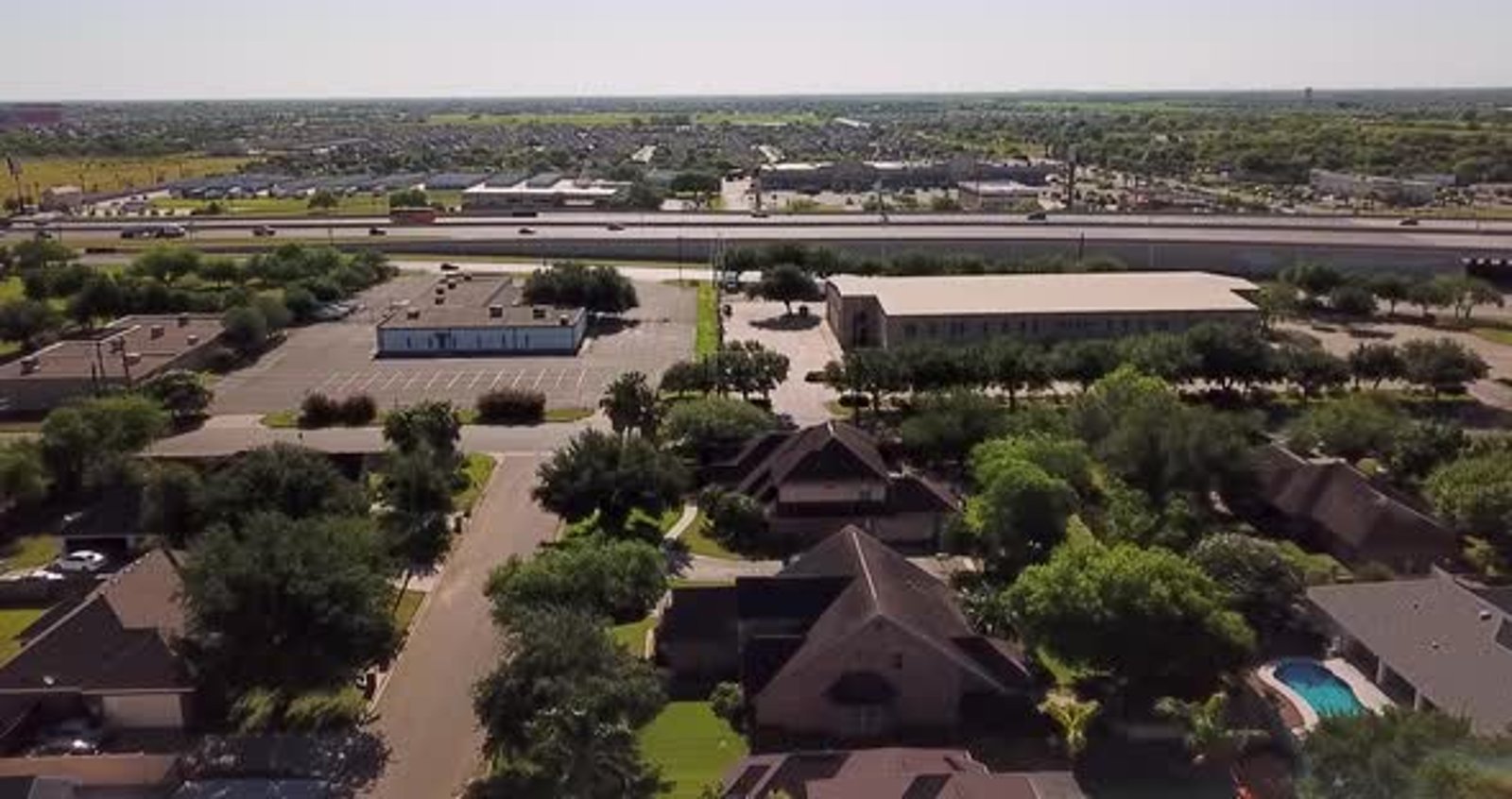
Hangar floors, aircraft aprons and tie-down pads are poured differently from warehouse slabs, and anyone who has watched a fuel-resistant joint sealant fail knows why. Near South Texas International Airport at Edinburg we build aviation-grade concrete and the grading and utility work around it, as well as the industrial pads that surround the field. The airport is described by the local economic development corporation as 1,080 acres along I-69C/US 281 about nine miles north of downtown, with 550 acres available for development.
A 5,000 foot runway is planned for extension to 7,600 feet, according to the same source, and the airport's news page lists current and upcoming improvements totaling $24,722,224, including a 31,500 square foot state aviation hangar targeted for fall 2025. Those are the owner's published plans, and schedules can change, but they show the kind of pavement and building work that follows an airport expansion: taxiway connectors, apron extensions, hangar slabs, access roads and utilities.
We offer a site contractor who can handle both the airside and landside pieces under one crew, with the testing documentation a public owner or an aviation consultant expects.
Hangars, aprons and tie-downs
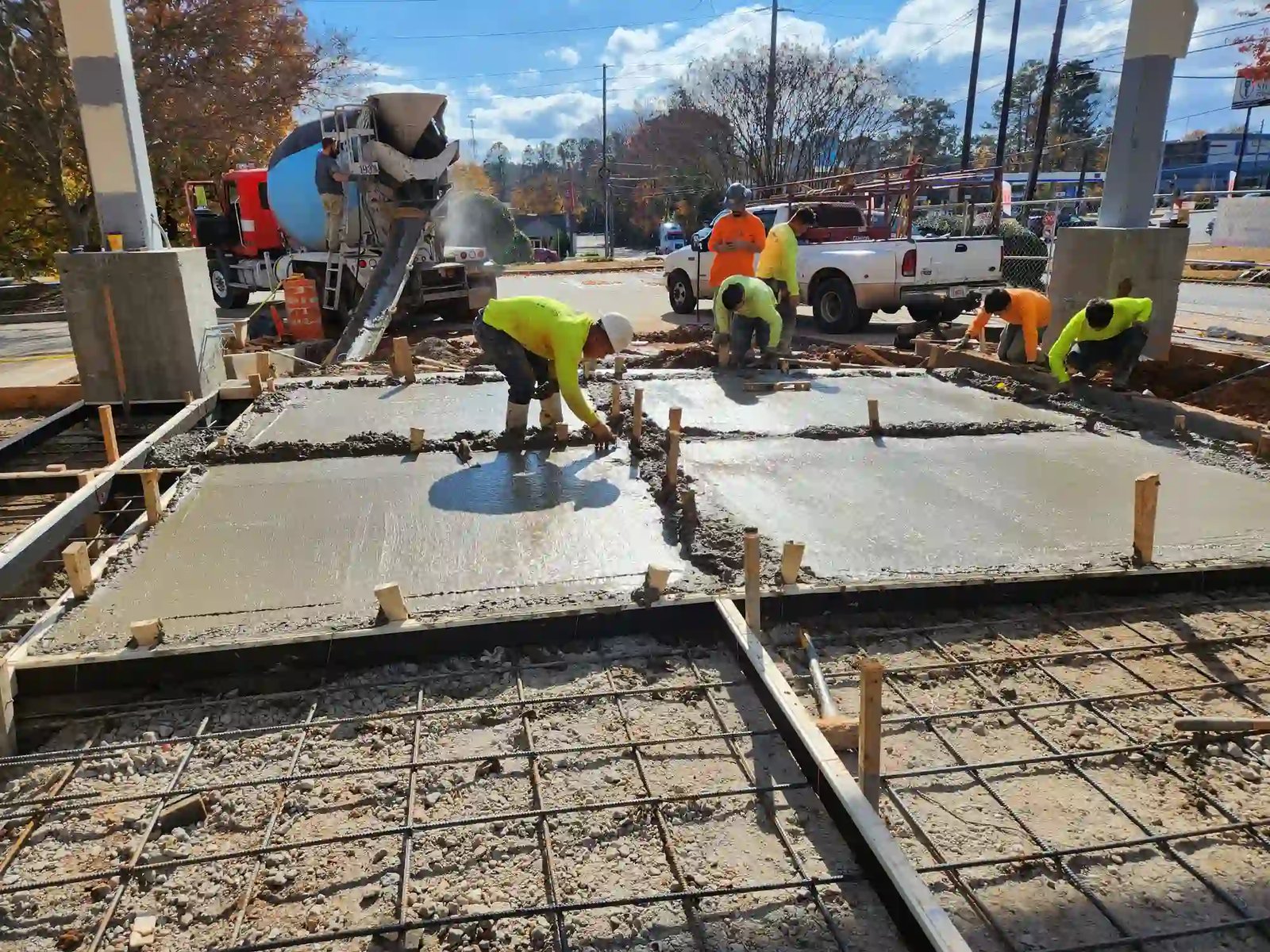
A hangar slab carries aircraft wheel loads, tugs and sometimes jacks, and it needs a slope to floor drains and an oil separator in many designs. We place reinforced slabs with joint patterns that keep wheel paths off joint edges, apply sealers that resist fuel and hydraulic fluids, and detail door tracks and thresholds to the hangar door manufacturer's drawings. Our aircraft hangar slab work is planned around clear-span bays, with pour sequences set so cold joints do not land at the door line.
Apron pavement is another matter. Rigid pavement for aircraft is designed by an engineer to specific load and subgrade criteria, and we build to that design with strict control over thickness, joint layout, dowels and curing. Tie-down hardware and embedded items are placed to survey, because a tie-down that is out of position by an inch is a recurring nuisance for pilots and ground crews.
Industrial land that follows the interstate
A trade publication reported in October 2025 that the local economic development corporation had sold land to six companies that would build nearly 400,000 square feet of industrial space over two years and was working with developers on more than 600,000 square feet of speculative industrial space within three years. A planned State Highway 68 is described in the same article as a 22-mile corridor running from I-69C/US 281 in Edinburg to I-2, with no completion date or cost given. We treat that road as a possibility rather than a schedule item.
I-69C itself is still being built in segments; a reference source says it starts at a stack interchange with I-2/US 83 in Pharr and continues north through Edinburg, with an 18-mile segment completed as of 2023. For a site contractor, the practical lesson is that road access to some parcels will change, and the haul route you used last year may not be the one you use next year. We confirm access and permits with the city and TxDOT before mobilizing.
Flat land, short fuses and storm runoff
Edinburg's terrain is flat, and flat ground drains slowly. Drainage design is the most important early decision on any lot, and we want to see the outfall before we set a pad elevation. Storm drain installation and detention basins are built to the engineer's design, and we verify slopes and inverts with survey, not by eye.
On airport work, there are extra considerations: foreign object debris control, lighting circuit protection, restricted access and notice periods for closures. We plan haul routes and stockpiles so equipment does not interfere with flight operations, and we sweep trucks and roadways to keep gravel off pavement used by aircraft.
Earthwork, pavement and pipe from one crew
We coordinate trade partners who run dozers, scrapers, motor graders and compaction equipment, so mass grading and fine grading are scheduled with the concrete placement. We coordinate forming, placing and finishing of the slabs and the installation of the underground utilities. That continuity lets us fix grade problems before concrete trucks arrive and reduces the number of parties responsible for tolerances.
We document our work with compaction reports, concrete tickets and cylinder breaks, and we deliver them to the owner or inspector without being asked.
Where the money goes on an airport-adjacent job
Pavement dominates the budget. Aircraft aprons and heavy taxiway connectors use thicker slabs and tighter tolerances than a parking lot, and the subgrade preparation beneath them can cost as much as the concrete itself. Hangar floors add embedded drains, door tracks and sealers. Landside work is usually less expensive per square foot but covers a larger area, which is why we separate the two in a proposal.
Mobilization is the second driver. A site with restricted access, security screening or night-only work windows takes more labor hours per unit of work. Ask the airport manager what the rules are before you set a budget, and we will price the work with those limits in mind. Savings come from combining scopes: grading, drainage, pavement and utilities in one contract rarely cost more than four separate ones and usually finish faster.
Sequencing around the growing field
When an airport adds a runway extension or a hangar, other owners often follow within a year or two. That pushes up demand for crews, concrete and trucking in the same months. We advise booking pavement work early, ordering reinforcing steel and joint materials ahead of the pour and scheduling the concrete supplier's plant capacity for large placements.
We also stage work so the owner has usable space early. A hangar slab can be released to the steel erector while the apron is still being formed, and a utility corridor can be finished and backfilled before paving begins.
Public owners, developers and aviation tenants
Municipal and public works owners at the airport or in the city need clear bid documents, prevailing procurement rules and tidy closeouts. Private commercial developers want speed and clear pricing. Aviation tenants want a hangar floor that meets the manufacturer's door and drainage details.
Edinburg is close to McAllen and Pharr, and companies that need space near all three can use a single contractor for estimates and scheduling.
Send the airfield or park plans
Share the layout, geotechnical report and pavement design and we will return a price with a schedule. For general slab questions, read about slab on grade construction.
Common Questions
Do you build airport pavement to FAA specifications?
We build to the project specifications, which may reference FAA standards or the airport sponsor's own requirements. We follow the engineer's design for thickness, joints and materials and keep the testing documentation the sponsor requires.
What is different about a hangar floor?
It has to handle aircraft loads, be sloped to drains and resist fluids. Doorway thresholds and track recesses must match the door manufacturer's drawings. We pour in sequences that avoid cold joints at the door line.
Can you work around flight operations?
Yes. We coordinate with the airport manager on work areas, haul routes, equipment heights and notice periods, and we use flagging, barricades and sweepers to keep the airfield clean.
How do you price speculative industrial pads?
We price by the pad, the yard and the utility package, with alternates for thicker pavement or additional dock positions. That lets a developer compare options before committing to a building size.