
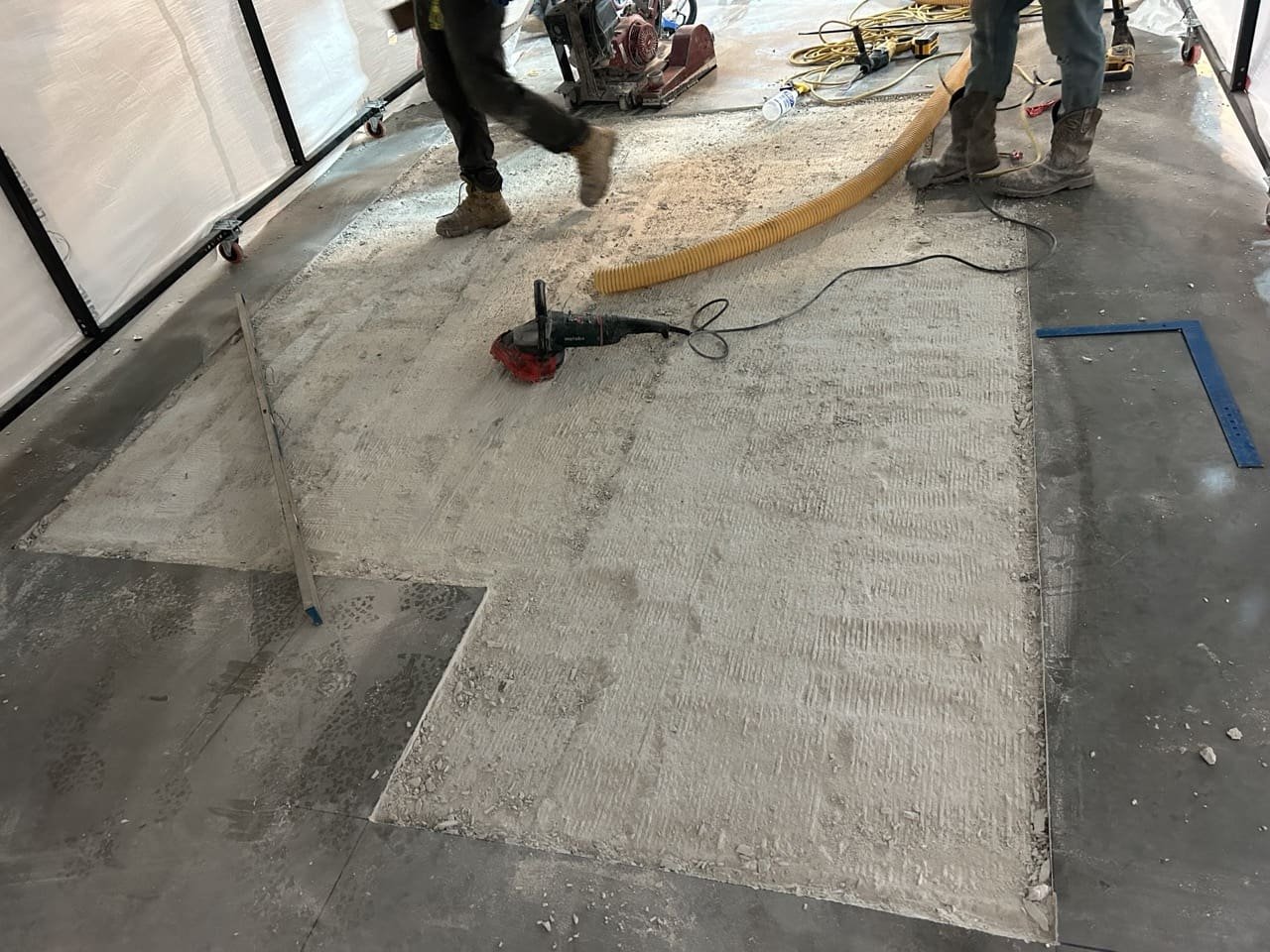

Concrete rarely fails all at once. It tells you first, with a hairline that grows, a patch that sounds hollow under a hammer, a rust stain at a joint or a floor that has started to curl at the edges. Repair is the discipline of reading those signs correctly and deciding whether the answer is a cosmetic patch, a structural fix or a plan to replace a section before it takes something else with it.
Texas puts concrete through more kinds of abuse than most states. Clay soil swells and shrinks under slabs, coastal salt works at the steel inside decks and seawalls, heavy truck traffic pounds joints, and hail and flood water find every weakness. A repair that suits a dry West Texas dock will not survive a Gulf Coast pier, and the other way round. We start by figuring out what actually caused the damage, since a patch over an active cause lasts one season.
Our trade partners repair floors, decks, aprons, dock pits, curbs, structural members and drainage structures for owners who need the building to stay in service while the work goes on. That usually means small work zones, careful phasing and a lot of cutting and chipping done cleanly so the neighbors do not notice.
Why Texas concrete ages the way it does
Salt and storm surge are the clearest example. The weather service reports that Hurricane Ike came ashore on Galveston Island at the upper end of Category 2 strength and that surge levels around the island and the west side of the bay are estimated at 10 to 15 feet. Concrete that sits in that water, or in the salt-laden air behind it, takes chlorides into the cover over its reinforcing steel, and when that steel begins to corrode it expands and pops the surface off in spalls.
Drought is the opposite problem. During one multi-year dry spell in a north Texas city, the record logged 100 days at or above 100 degrees in a single year, a reminder that heat and drying move clay and pull on everything poured on it. Different cause, same visible result: cracks, settled joints and edges that no longer meet. Good repair work begins by working out which kind of damage you are looking at.
What we repair and how we diagnose it
Typical repair scopes include epoxy or polyurethane crack injection, partial-depth patching of spalls, full-depth section replacement, joint resealing and rebuilding, delamination removal, surface grinding and resurfacing, and strengthening of structural members with added steel or composite wrap when an engineer specifies it. Before we propose any of it, we sound the surface, probe suspect areas, and compare what we find with the original drawings if the owner has them.
When the concern is structural, we bring in the owner engineer and follow the repair design rather than inventing one. When the issue is a floor that no longer carries lift trucks, the answer may be an overlay, or it may be removing and replacing a joint strip. If a slab has simply sunk, the cheaper answer may be slab lifting rather than demolition, and we say so plainly.
Opening up the damage without making it worse
The first step is removal of all unsound concrete to a sound edge, and the way you cut it matters. We saw-cut perimeters to a clean depth rather than chipping feathered edges, since a feathered patch will crack at its thin lip. Where we need to expose reinforcing steel, we take the concrete back far enough to clean the full bar, treat it, and add steel where section loss is serious. The sawing, cutting and coring crews we coordinate do that prep so the patch has an edge to hold onto.
Then comes the bond and the material. We select repair mortars and concretes with a shrinkage and modulus that suit the existing slab, prepare the surface to the profile the manufacturer requires, and cure the patch properly. A patch that dries too quickly in Texas wind separates from its neighbor in a few months, so we cover and mist it like new work.
What makes repair cost vary
The honest answer is that depth and access drive it. A patch two inches deep in an open lot is simple, while the same patch on the underside of a parking deck needs shoring, a lift and traffic control. The number of cuts, the need for new reinforcing, the speed required to reopen a lane or a dock door, and overnight work all add up.
It is also true that a thorough investigation is cheaper than a second repair. Owners who authorize testing up front, such as cores, half-cell readings or ground-penetrating scans, usually spend less overall because the repair is sized to the real problem. We lay out options with prices, including the do-nothing and monitor option when that is appropriate, and let the owner choose.
Repair work for public owners and coastal sites
Public works owners are often the ones facing the largest backlog. Texas voters approved Proposition 4 on November 4, 2025, committing up to $1 billion a year from state sales tax revenue, beginning in 2027, for water supply and related programs that include pipe repair and flood mitigation. That money will keep municipal and public works owners busy rehabilitating structures, vaults and channels, and many of those jobs are concrete repair at heart.
On the coast, the Coastal Texas program estimated at $34 billion includes work on Galveston Seawall improvements, and the $703 million Freeport project is aimed at reducing storm surge flood risk. We serve Galveston and Freeport owners with the kind of small, careful structural repair that keeps existing assets working in the meantime, including parking structures where decks and ramps need rehabilitation.
Have us look at the damage
Tell us what you see, send photos or drawings if you have them, and we will inspect the area, explain the cause and quote the repair and the options. We repair in service wherever the facility allows.
Common Questions
How do you know whether a crack is structural?
We measure width, check whether it moves with temperature or load, note whether it runs through the full section and look for rust staining or offset on each side. A crack that is narrow, stable and dry is usually cosmetic. One that is growing, leaking or accompanied by deflection goes to the owner engineer before anyone injects it.
Can repairs be done while the building is operating?
Most can. We section off small work zones, use dust-controlled cutting, schedule noisy work for off hours and choose fast-curing materials when a dock door or aisle has to reopen. The plan is agreed with the facility manager before we start.
How long will a repair last?
If the cause is fixed and the material and bond are right, it should perform as long as the surrounding concrete. If the cause remains, for example ongoing soil movement or chloride in the steel, the repair buys time but not permanence. We tell you which case you are in.
Do you match color and texture?
For structural and industrial surfaces the priority is performance, not color. Where appearance matters on a sidewalk or an exposed face, we use matching mortars and finish techniques, and we show a test patch for approval before the whole area.
Do you need drawings of the original structure?
Drawings help, since they show where the steel is and what was specified. If none exist, we use scanning and selective demolition to find the reinforcing before cutting near it.