
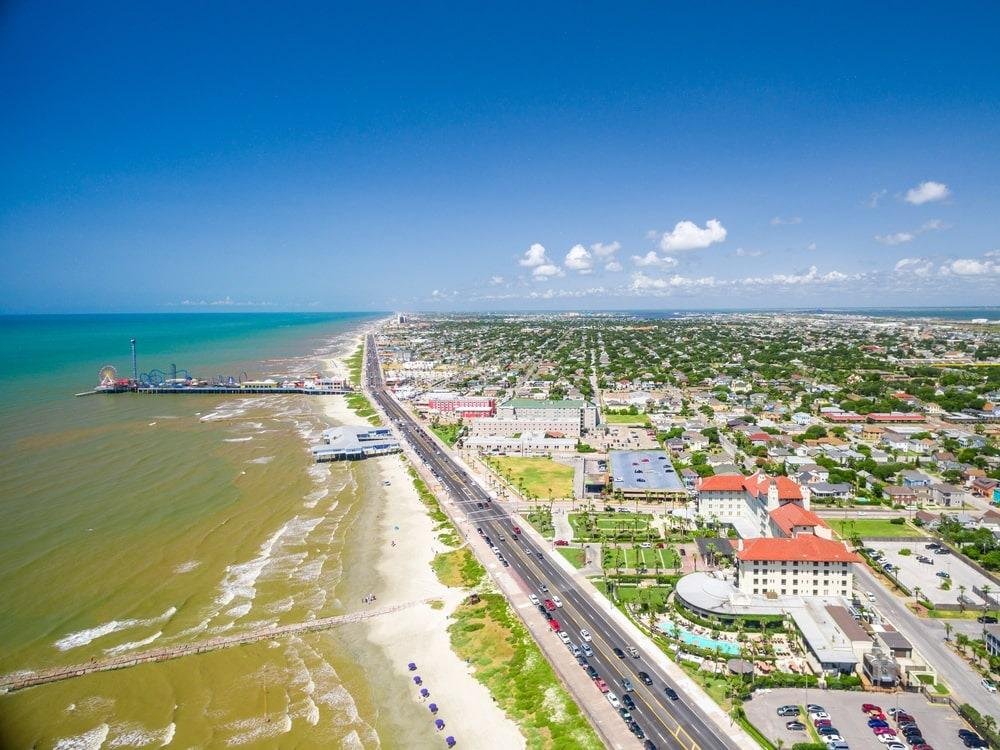

Concrete on Galveston Island has to be planned around salt air, high groundwater, flood elevations and the logistics of getting materials across one causeway, and we approach every island project with those four conditions written on the first page of the plan. We form and pour foundations, slabs, garages and flatwork, and we install the drainage and utilities that go with them.
The island's institutions and port set the demand. The Galveston Chamber of Commerce identifies the University of Texas Medical Branch as the largest employer in the city and county, and names it and Texas A&M University at Galveston as institutions projecting growth in facilities and enrollment. The port's own release says almost 1.5 million passengers embarked on 354 cruises in 2023, supporting 4,547 jobs. A separate April 2025 release described a $156 million cruise terminal that converts two cargo buildings and adds a seven-story precast concrete garage with more than 1,600 spaces.
Each of those facts points to the kind of work an island contractor does: medical and academic site work, parking structures and terminal approaches, and repair of aging pavements.
Storm history is part of the design
Per the National Weather Service Houston/Galveston office, Hurricane Ike came ashore on September 13, 2008 at the northern tip of Galveston Island with upper Category 2 intensity, and surge on the island and along the west side of Galveston Bay is estimated at 10 to 15 feet. That number is why finished floor elevations, foundation systems and drainage here look different from inland. Owners build higher, tie structures down more securely, and use materials that tolerate water.
We help by building pads to the flood elevation the engineer requires, placing fill in controlled, tested lifts so the pad does not settle, and detailing slabs and grade beams for flood loads. We also pay close attention to drainage on the site; a pad that is above the flood elevation but sheds water poorly is still a problem on an ordinary rainy day.
Cruise, medical and academic demand
The cruise business generates a particular kind of project: terminal approaches, passenger loading areas, bus and taxi lanes, and parking. A precast garage as large as the one described in the port release needs foundations, ground-level slabs and ramps to be placed on time for a sailing season, and that kind of fixed date shapes everything. We treat dates like that as the first constraint, not the last.
The medical and university campuses generate steadier, smaller work: clinic expansions, parking, utility upgrades, accessible routes and renovation. Our hospital and school and university experience applies directly, especially where work must stay clear of patients and students. Most of it is infill on tight lots, so phasing and neighbors drive the plan, and school and healthcare owners get a written access plan before mobilization.
Salt, water and durable concrete
Marine air and salt spray attack steel in concrete, so we pay attention to the details that protect it: adequate cover over reinforcing, well-consolidated concrete, controlled water-cement ratio and proper curing. The engineer specifies the mix, and we work with the ready-mix supplier on supplementary cementitious materials, air content where relevant and delivery timing.
Placing and curing practice matters equally. We keep fresh concrete from being washed by rain, protect exposed surfaces from wind and sun, and apply curing compound promptly. Where epoxy-coated or alternative reinforcing is specified, the rebar placement crews we coordinate handle the material carefully so coatings are not damaged.
Getting materials to the island
Everything comes across the causeway, and delivery timing matters more than on the mainland. Ready-mix has a time limit between batching and placement, so we confirm batch plant locations, traffic patterns and backup suppliers before any pour. Large placements are scheduled to avoid peak weekend traffic and cruise embarkation days, which can slow vehicles to a crawl.
Storm season adds a calendar constraint. During hurricane season we secure the site, remove loose material, and plan for work stoppages. Owners who are also building in Freeport or Port Arthur can use us on several coast projects with a shared schedule.
Elevation, floodplain and coastal approvals
Island projects typically involve floodplain review, coastal construction rules and, for waterfront sites, additional agencies. Texas leaves commercial code adoption to municipalities, using an International Building Code baseline plus local amendments, so we ask the city which codes apply and request pre-construction meetings when the plans involve a variance. Projects of $50,000 or more also go through the state accessibility registration under the Texas Accessibility Standards.
The $34 billion Coastal Texas program, approved in the Water Resources Development Act of 2022, includes gates across the ship channel, seawall improvements and a ring barrier on the island's backside, and could take up to 20 years to build according to the trade press. For owners, the practical effect is long-term: expect a decade of coastal construction activity and coordinate your site work with it.
Why island budgets run differently
Mainland unit prices do not carry over to an island. Mobilization includes causeway time, ready-mix may travel farther, and crews need lodging or longer days. Higher flood elevations mean more fill and sometimes deeper or more heavily reinforced foundations. Durability measures such as added cover, corrosion protection and tighter curing control add cost, and they are generally cheaper at the start than as repairs later.
We try to give owners choices. Alternates for a different pavement section, for a phased pour sequence or for reusing excavated material on site can change the total considerably. Our parking lot concrete pricing, for example, lists thickness, joint spacing and subbase separately, so you can see where an adjustment saves money.
Start planning on the island
Send the elevation requirement, soil data and delivery constraints. We will lay out a plan that accounts for causeway logistics, saltwater exposure and storm season.
Common Questions
How do you protect rebar from salt exposure?
By following the engineer's mix and cover requirements, consolidating the concrete well and curing it properly. If coated or alternative reinforcing is specified, we handle and place it to avoid damage.
What about work during hurricane season?
We prepare a storm plan for each site, including securing equipment, removing loose material and protecting fresh concrete. Schedules are drawn with weather windows in mind, and we communicate delays early.
How does the causeway affect pour schedules?
Truck travel time, bridge traffic and special events can lengthen delivery. We plan batch plant selection and pour start times to keep concrete within its allowable time, and we keep backup trucks available.
Can you build within flood elevation requirements?
Yes. We place engineered fill and build foundations to the elevation the engineer specifies, and we verify the elevations with survey before forms are set.
Do you do repair as well as new construction?
Yes. Older island pavements and slabs often need repair or replacement, and the concrete repair and restoration crews we coordinate handle sawcutting, removal and replacement.