
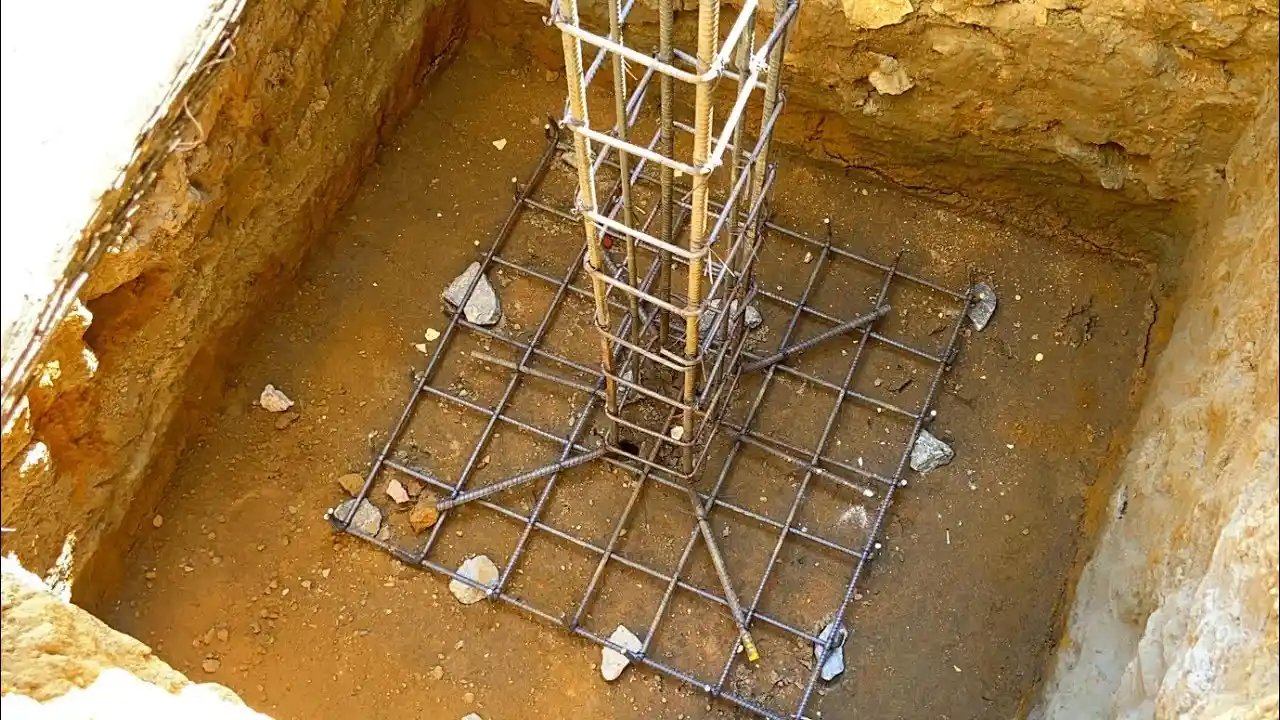

Nobody photographs the rebar after the pour, which is exactly why it has to be right before it. Reinforcing steel carries the tension that concrete cannot, holds cracks tight, ties members together and, in a structure that moves, decides whether the movement is harmless or serious. A bar that sits low in a slab, a lap that is too short or a stirrup that was left out cannot be seen from the surface, but its absence shows up in service years later.
We place rebar for foundations, grade beams, drilled piers, slabs, walls, columns, elevated decks, pavements and structures such as pump stations and vaults. The work starts on paper with the engineer drawings and bar schedules and ends with an inspector walking the steel before concrete is released. In between is the physical labor: unloading, sorting, cutting and bending where needed, setting, tying, supporting and checking.
The common thread on Texas jobs is volume and tolerance together. Large slabs and big foundations need a lot of steel, installed quickly, and placed to within fractions of an inch of the designed depth.
Crews who read the drawings and set the steel
We coordinate the steel placement closely, and the reason is accountability. The same people who read the shop drawing are the people who set the bar, so a question about a splice or a congested joint is answered at the site by someone who knows what the engineer meant. Foremen check each bar mark against the schedule as it arrives and flag mismatches before the steel is tied in place.
The tools are not exotic: tie wire and tying tools, bar benders, cutters, spacers and chairs, and a level and tape measure. What matters is discipline, like keeping bars at the right spacing, holding clear cover with chairs set at proper intervals rather than eyeballed, and pre-tying dowels into footings so columns and walls land where they should. On larger jobs we use templates and survey layout so anchor bolts and dowels match the building grid.
Cover, laps, grades and inspection
Texas does not have a single statewide commercial code applying equally everywhere. Under state law, the International Building Code is the municipal commercial building code, with each city free to adopt newer editions and local amendments by ordinance, so detailing for reinforcing can vary by jurisdiction. We confirm the adopted edition for each project and build to the drawings and specifications, which reference the concrete and reinforcing standards that apply.
In practice, the checkpoints are the same. Bars must meet the specified grade and be free of loose rust and contaminants, laps and splices must meet the required lengths, clear cover must be maintained to the formed or soil face, and the special inspector reviews the steel before the pour. We schedule that inspection and fix any punch items before the truck arrives, so there are no delays and no surprises.
Sequencing steel around formwork, trades and weather
Steel placement fits between formwork and the pour, so it has to be planned with the people on both sides. On a slab, we coordinate with formwork crews so edges are ready for dowels, and with plumbers and electricians so sleeves and conduit are placed before the top mat goes on. On a wall or column, we set the cage ahead of the form, then confirm alignment as the forms close.
Weather also matters, particularly on coastal and open-plain sites. Wind can loosen unsupported tied mats, rain rusts surfaces and mud on bars can reduce bond, so we protect and clean steel as needed. If concrete is delayed, we recheck the cover and chairs before the pour resumes rather than assuming nothing moved. On heavily reinforced members we also coordinate with mass concrete pours where thermal control plans change placement order.
Where steel quantities get serious
Industrial and EV manufacturing campuses consume steel in huge amounts. Tesla's Gigafactory outside Austin is described as covering 2,100 acres and 10,000,000 square feet of floor area, with construction beginning in July 2020 and first deliveries on April 7, 2022. A project that large is a sequence of foundations, slabs and walls, each with its own reinforcing, and our work on automotive and EV plants reflects.
Warehouses and logistics buildings need continuous reinforcement in dock pits, panel foundations and truck courts, and tilt-wall buildings depend on dowels and panel cages set exactly. The Corpus Christi Harbor Bridge, a $1.3 billion bridge with 538-foot towers and a 1,661-foot main span, is a reminder of how much structural steel and reinforcing a major crossing consumes, and how small tolerances multiply at that scale.
Steel in the larger structure
Reinforcing rarely stands alone. It is part of a package with post-tensioned slabs in some buildings, with drilled piers and grade beams in others, and with testing and quality control on nearly every job. When the engineer specifies mechanical couplers, epoxy-coated bars or galvanized steel, we handle the added care that each requires.
Developers of distribution facilities, including logistics and warehouse developers, often ask for a single concrete contractor who places the steel and pours the concrete. That is the arrangement we prefer, because it removes the gap where steel questions get lost between subcontractors.
What moves the price
Steel price is the obvious variable, but labor drives more of the difference between bids than most owners expect. Congested sections, small bar sizes, heavy bending, complex dowel layouts and tight overlap with other trades slow a crew down. A flat slab with a single mat is productive. A grade beam grid with stirrups, or a pier cap with many bars crossing at once, takes far longer per ton.
Delivery logistics, laydown space and crane or forklift access also matter. On remote sites in West Texas or the Gulf Coast, steel deliveries have to be planned like concrete deliveries, so we order early, stage by pour area and keep the site tidy so bars do not get lost or damaged. At the Port of Brownsville, the Rio Grande LNG project describes about 7,500 construction and trade workers at peak, which shows how heavily a large Gulf project can draw on the same pool of steel crews.
Get your steel placed right the first time
Send us the structural drawings and the pour schedule and we will review the reinforcing for constructability, price the placement and set an inspection plan. Call or use the quote form to start.
Common Questions
Who provides the shop drawings and bar lists?
Normally the reinforcing steel fabricator prepares them from the structural drawings, and the engineer reviews them. We review them for constructability before steel ships, looking for congestion, missing dowels and conflicts with embeds, and we raise questions early.
How do you control concrete cover?
With chairs, spacers and supports sized for the cover specified, set at intervals that keep the bar from sagging under foot traffic. We check cover before every pour, and where the steel has been walked on we reset it.
Can you place epoxy-coated or galvanized steel?
Yes. Coated bars need padded tying tools and cleanup of damaged coating, and galvanized and plain bars should not be mixed carelessly. We follow the specification and the supplier instructions for each type.
What happens if the inspector finds a problem?
We fix it before the pour and ask for reinspection. Common items are missing chairs, short laps and misplaced dowels, and they are much cheaper to correct before concrete covers them.
How early should steel be ordered?
As early as the drawings allow. Lead times vary with the market and the bar size, and large jobs consume a lot of steel at once. We help owners and general contractors set an order date that keeps the pour schedule on track.