
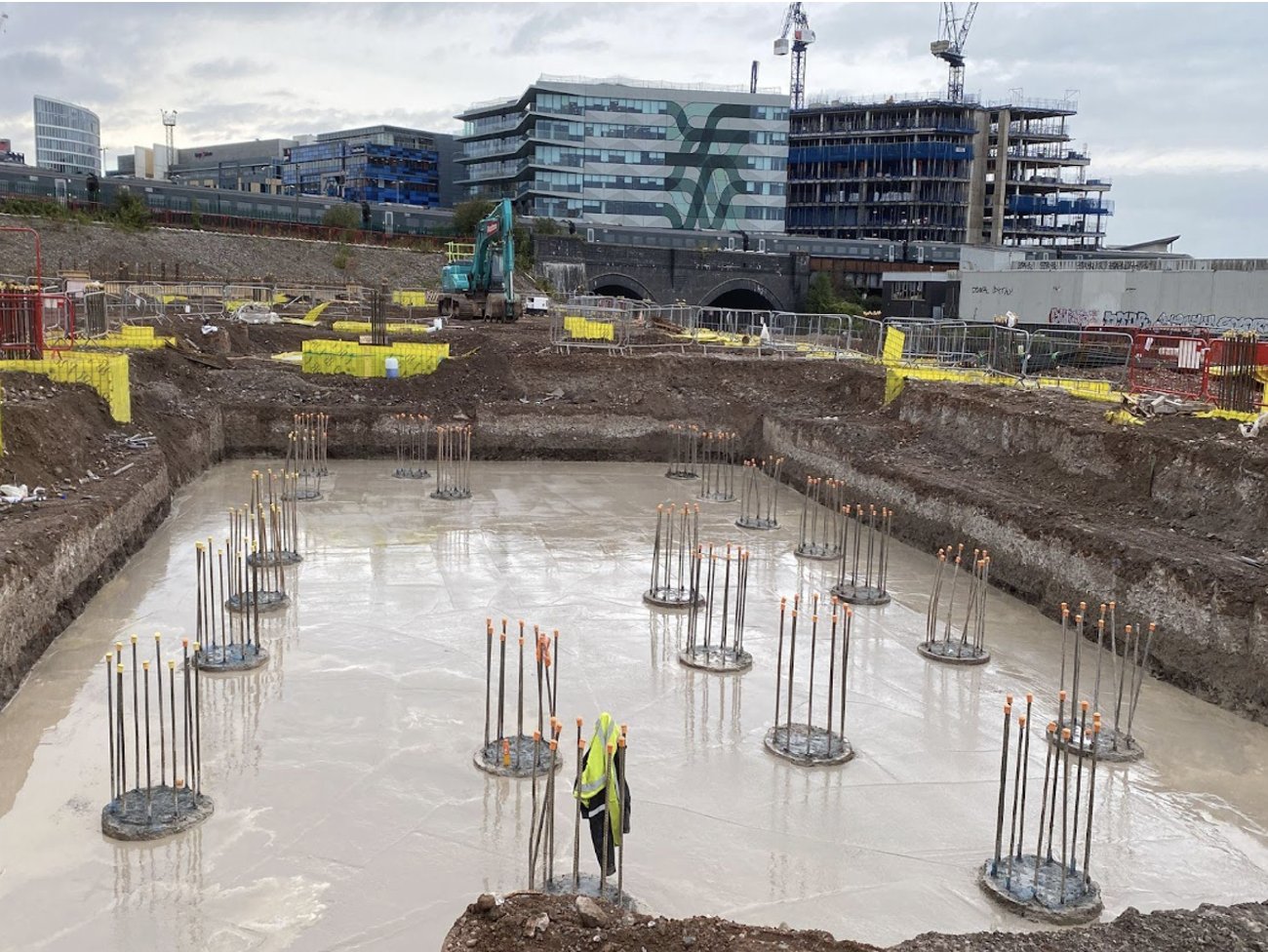
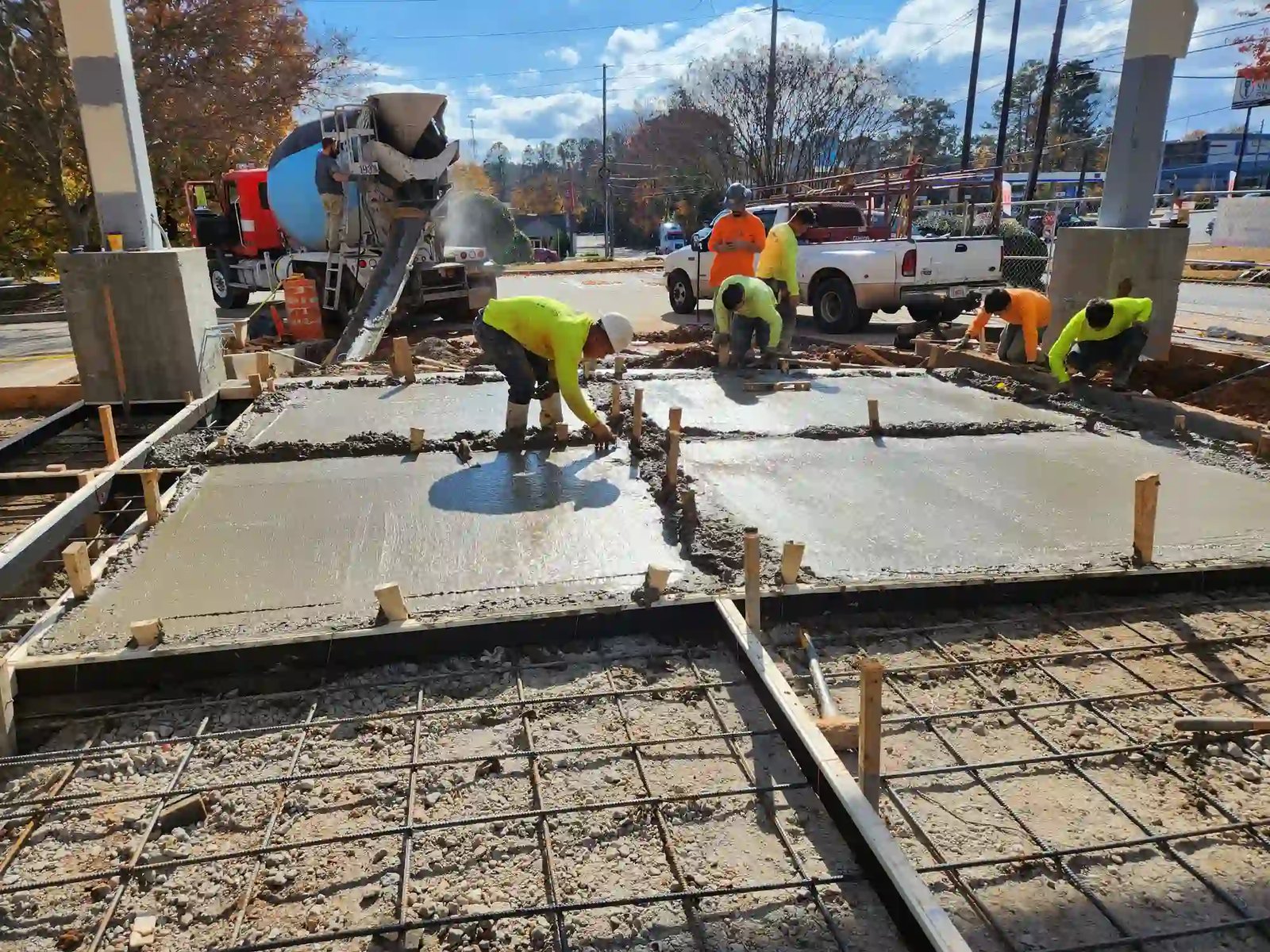
Moving dirt costs money twice, once to dig it and once to haul it, so the cheapest yard on a site is the one that never leaves. Cut and fill earthwork is the discipline of balancing those two numbers: how much material the plans take out of the high ground, how much they need to build up the low ground, and how far each yard has to travel in between. We build the haul plan before we mobilize, and we revisit it every time the geotechnical report or a test pit tells us something the plans did not.
On a small pad the balance may be a few thousand yards and the haul a few hundred feet. On a corridor or a large development it can run to hundreds of thousands of yards across a mile or more, with several soil types in the same cut. The method is the same, but the planning is not, and the difference between a profitable earthwork package and a painful one is almost always found in the cut sheets and the soil boundaries, not in the equipment.
Corridors where the dirt has to balance
Texas highway work shows how long linear earthwork gets. TxDOT's San Angelo North Relief Route study covers about 11 miles on new location between US 87 and US 67, with three mainlanes in each direction, interchanges at US 87, US 277 and US 67, and a proposed 500-foot right of way for the potential Ports-to-Plains and I-14 corridors. Construction is listed as beginning in 2032, subject to change. A new-location corridor of that width means long embankments, deep cuts through whatever rock or caliche lies beneath, and a balance that has to be managed station by station.
Interchange work compresses the same problem into a small footprint. A proposal for the I-20 corridor in Midland County, between Loop 250 and FM 1788, described a new interchange at County Road 1250 with new ramps and improved frontage roads to serve the industrialized area there. Ramps and overpass approaches are built from engineered fill placed in lifts, which is why the engineered fill and soil stabilization crews we coordinate and the cut and fill crews we coordinate plan the job together.
From stripping to finished subgrade
The work begins with clearing and topsoil removal, then the staking of cut and fill limits from the earthwork model. We open the cuts in the order the haul plan sets, loading scrapers or trucks, and place the fill in lifts of a thickness the compaction equipment can actually reach. Each lift gets density tests, and anything that fails is reworked before the next lift covers it.
Cut material is not always fit for fill. Wet clays, organic soils and fat plasticity-index materials may need drying, blending or lime treatment, and rock and caliche may need to be ripped, screened or crushed to be used at all. We sort the cut by suitability as we dig so that good material goes to structural fill and poor material goes to the places where it can be used, which on many sites is the landscape berm, not the building pad.
Phasing, stability and funding gaps
Large projects do not always get built in one run. The Camino Real Regional Mobility Authority describes the Americas Interchange at Loop 375 and I-10 in El Paso as an eight direct-connector project. Its second phase added three direct connectors in 2013, and a third phase, westbound I-10 to northbound Loop 375, is still awaiting funding. A partially built interchange has to hold up for years, so embankments left between phases need stable slopes, drainage and erosion protection that do not depend on the next contract.
We bring that thinking to private work. If a commercial developer is going to build a site in phases, we leave each phase graded to drain, with swales and slope protection in place, and with the fill compacted to a standard that will not need to be reworked when the next phase starts. Where the open ground has to be controlled in the meantime, erosion control and SWPPP measures are installed as part of the earthwork and not added after the first rain.
Haul plans, machine control and testing
We use machine control on the dozers and graders so the cuts reach plan grade without constant stake checking, and we compare the model to the field with a rover each day. On long hauls we map the haul roads, set the number of trucks to the loader's cycle, and watch the cost per yard as the work goes on. If the balance drifts, we adjust before the quantity becomes a change order.
Compaction testing runs alongside placement, not behind it. Our trade partners know the moisture-density behavior of the soils in the region, which means we can add water or let a lift dry before testing and avoid failing numbers. When the cut is rock, the same logic applies to the shot or the ripping pattern, and we coordinate with the rock and hard ground excavation crew on how the material is going to break.
Where earthwork budgets go wrong
Haul distance, soil suitability and weather are the three variables. A site that is out of balance by a hundred thousand yards will carry an import or export cost that dwarfs everything else, and a wet season that stops hauling for weeks will cost standby time on every machine. Dirt that tests above optimum moisture needs drying, which takes sun and wind and adds time, and a large distribution center pad can have a hundred acres of it.
We ask owners and general contractors to share the geotechnical report and the survey at bid time, and we flag the quantities that look uncertain. When material has to move off or onto the site, our import, export and haul-off pricing is built from measured truck cycles rather than rules of thumb, and we report it in the same units as the cut and fill balance.
Bring us the cut sheets
Bring us the cut sheets and the geotechnical report and we will check the balance, flag the soils that will not reuse, and give you a haul plan you can compare with the rest of your bids.
Tell us the schedule and the access, and we will price the work to fit.
Common Questions
How do you decide whether to haul material off or reuse it?
We compare the cost of drying, blending or treating the cut material against the cost of exporting it and importing something better. The geotechnical report tells us which soils are suitable. On many sites the answer is to reuse most of it and export only the unsuitable fraction.
What is a shrink and swell factor and why does it matter?
Soil changes volume between the bank, the truck and the compacted fill. A yard measured in place does not equal a yard compacted, and the difference can be ten or fifteen percent depending on the material. We build the factor into the balance so the site comes out even.
Can you work on a site that is partially built from an earlier phase?
Yes. We start with a survey of what is in place, test the existing fill if the records are thin, and tie the new work to the old. The first step is usually to find out what was compacted and what was only dumped.
How do you handle rain during a cut and fill job?
We shape the surface to shed water at the end of every shift and seal it with a smooth roller. After a rain we wait for the surface to dry or scarify it, then retest. That avoids burying a wet layer that would fail later.
Do you provide the earthwork quantities or do we?
We can check the engineer's quantities and provide our own model. A second set of numbers often catches differences in cut limits or topsoil depth before bidding, which is worth the effort on a large site.