
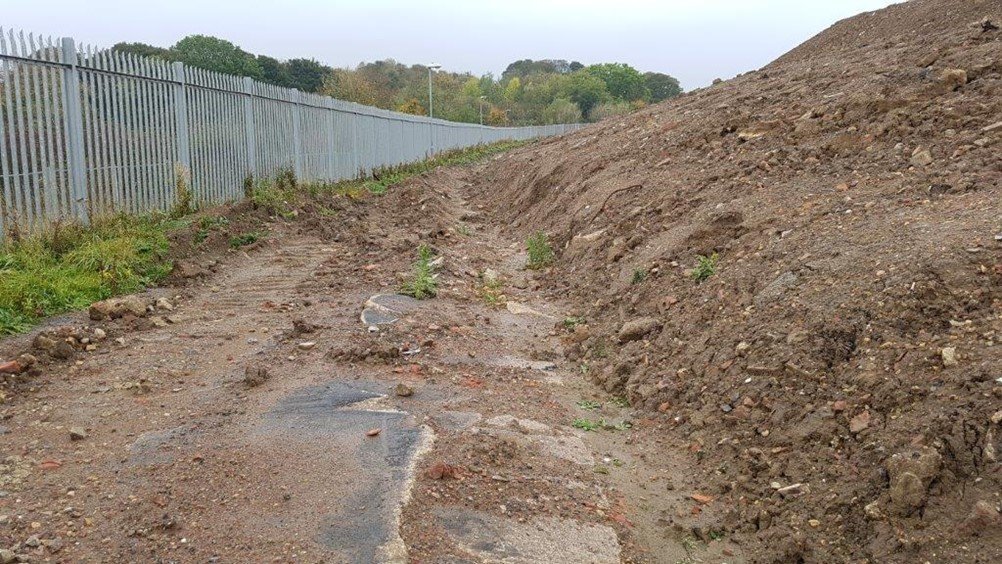

The dark layer on top is the most valuable few inches on a building site, and the least useful under a building. Topsoil holds the organic matter, the seed bank and the microbes that make a landscape grow, and it is also soft, compressible and full of roots, which is exactly what a slab or a road should not sit on. Stripping it early, setting it aside where it will not wash away, and putting it back at the end is a basic piece of site work that affects both the structure and the finished landscape.
We strip to the depth the plans or the geotechnical report call for, which is often six to twelve inches but can be much more in places where the organic layer is deep. We stockpile it in a location that does not block drainage or the next phase, protect it from wind and water, and keep it separate from subsoil, rock and debris. Done well, it saves the owner the cost of importing topsoil for the landscape package and saves the project from a very common settlement problem.
Stripping, stockpiling and respreading
The sequence begins with marking the limits of disturbance and the depth of the strip. A scraper, a dozer or an excavator with a smooth bucket removes the topsoil to the specified depth, and a grade checker watches the interface so that subsoil does not end up in the pile and topsoil does not stay under the pad. Where the organic layer is uneven, we probe on a grid and adjust.
Stockpiles are shaped with side slopes the material can hold and a crown that sheds water, and they are placed outside the construction limits and away from drainage ways. At the end of the work, the topsoil is respread over the landscape areas to a uniform depth, lightly compacted, and left ready for seed or sod. We also keep records of the volume stripped and replaced, which helps with import calculations when the pile turns out to be smaller than expected.
Wind, dust and the cost of losing the pile
Stockpiles in dry, windy country do not stay put without help. The National Weather Service reports that on March 14, 2025 the Amarillo airport recorded a record 83 mph wind gust and visibility fell below a quarter mile in blowing dust, with a multi-vehicle pileup south of Canyon. A bare pile of fine topsoil in that setting is a source of dust within hours, and a regulator or a neighbor will notice. We protect piles with a cover of mulch or tackifier, seed them if the stockpile will sit for months, and keep them lower and flatter than they would be in a wetter place.
Large industrial parcels present a scale issue. Area Development reported that Maruichi Stainless Tube planned a $75 million, 125,000-square-foot manufacturing complex on a 33-acre parcel in Seguin's Rio Nogales Industrial Park, just south of I-10, expected to create 106 jobs. On a parcel like that, the building and paving cover much of the ground, so the topsoil that is stripped usually exceeds what the site can take back, and a plan for the surplus belongs in the earthwork scope from the start.
Deciding how much to keep and where to put it
The right amount of topsoil to keep depends on the landscape plan, the soil's quality and the available space. Owners who will plant lawns and trees want most of it back, while industrial sites with minimal landscaping may need only a fraction. The rest can be sold, moved to another phase, used for berms or exported with the other spoil, and the cost of those choices should be compared before stripping starts.
Contamination and weeds also matter. Topsoil containing invasive seed, such as Johnson grass, can seed a new landscape with a problem, and topsoil from a site with a history of fuel or chemical use may require testing before reuse. We raise those questions early, and we segregate suspect soil so a few bad yards do not condemn the whole pile. The import, export and haul-off side is priced from the same quantities.
What comes before and after the strip
Stripping follows site clearing and grubbing, because roots and stumps have to be removed first, and it precedes the cuts and fills that shape the grade. On a project with significant earthwork, the sequence is clearing, stripping, rough grading, utilities, fine grading and paving, and the topsoil pile is the one item that crosses most of those phases.
We link the work to the rest of the site package so that crews do not trample the piles or bury them under fill. For owners planning large pads, our building pad preparation work starts with a clean strip, and commercial developers who are carrying a landscape budget can use the stockpile to reduce it.
Stormwater rules and stockpile controls
Stockpiles are regulated as part of the construction stormwater plan. The SWPPP typically requires perimeter controls, such as silt fence or wattles, and stabilization of piles that will sit for an extended period. Some local ordinances also set limits on the height of stockpiles or the time they may remain, and some require a permit for importing or exporting soil from a site.
We install the controls with the stockpile, not after it, and inspect them with the rest of the site. Piles near a drainage way or a property line get an extra line of defense, because a pile that slumps into a creek is a regulatory problem as well as a loss. The erosion control and SWPPP team we coordinate handles the details.
Plan the topsoil before the strip
Plan the topsoil before the strip. Send us the landscape plan and the soil report and we will tell you how much to keep, where to store it and what to do with the rest.
We include records of the volumes so the numbers match the landscape package.
Common Questions
How deep should topsoil be stripped?
The geotechnical report and the plans usually say. Six to twelve inches is common, but the depth varies with the organic content of the soil. We probe the site and adjust so that we remove all of the soft organic layer under structures and paving.
Can topsoil be used under a building pad?
No. Topsoil is organic and compressible, and it decomposes over time, so it settles. We strip it from under pads and pavements and replace it with engineered fill or compacted native soil.
How long can a stockpile sit?
As long as the controls hold. Piles that sit for weeks should be seeded or covered, and piles that sit for months need regular inspection. We cover or seed them according to the plan.
What do we do with extra topsoil?
We can respread it on other areas of the project, shape it into berms, move it to the next phase, or sell or haul it away. The best choice depends on quantity, quality and what the landscape needs.
Do you screen the topsoil?
If the specification calls for screened topsoil, we have the equipment to screen it, and we can blend in compost or sand to meet a mix requirement. Screened soil costs more and is typically used for lawns and planting beds.