
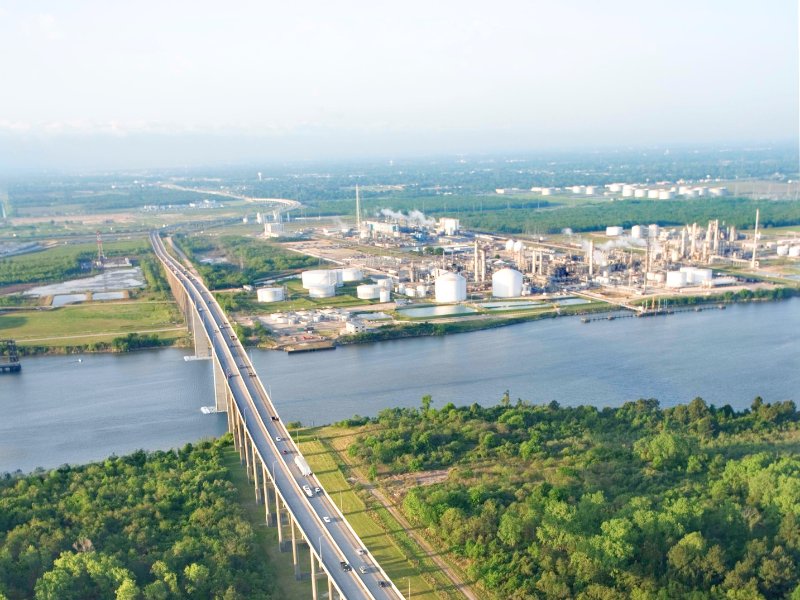

Industrial owners along the Houston Ship Channel need foundations, containment and underground work built by crews who understand how an operating site behaves around them, and that is the work we take on in Pasadena. We manage equipment pads, pipe sleeper foundations, secondary containment and truck pads, we trench and backfill around live lines, and we do it with the permit, access and safety paperwork that plant neighbors expect.
The local setting explains why. A refining complex in Pasadena covers 466 acres, with a 323-acre refinery and 143 acres of additional land, and a retrofit that began in 2020 raised throughput by almost 15 percent to 125,000 barrels per day, with phased start-up running into the first quarter of 2025. Projects of that kind throw off a steady stream of nearby work for contractors: new pump pads, tie-in trenches, laydown surfaces and drainage improvements, much of it with short windows and exacting inspection.
Not everything here is heavy process. Smaller flex and tilt-wall buildings fill business parks near the beltway, and those owners need clean slab work on a faster calendar. We approach both with the same rule: read the soil report, plan the sequence around access, and treat the cure as part of the schedule.
Pads, trenches and containment for process neighbors
Equipment pads and machine foundations are the most common pour near a refinery fence line. They are typically reinforced heavily, set on prepared engineered fill, and cast with embeds and anchor bolts held to tight templates by the mechanical contractor's survey. The equipment pad crews we coordinate coordinate bolt layout, grout space and drainage slope so the equipment goes down once and stays level.
Where spill control is required, we build secondary containment pads with sealed joints, waterstops and curb geometry that hold the design volume. Utility work usually runs alongside, including fire lines, sanitary connections and conduit banks, and we dig these with locating, potholing and hand excavation near live pipes. Closing a trench the same shift is the standard, not the exception.
What our trade partners handle
We coordinate the pieces of an industrial site that tend to cause delay when they are handed off: forming and placing footings, pedestals and slabs, setting rebar and embeds, placing and finishing flatwork, excavating and backfilling utility trenches, and grading the pad. Keeping those trades under one superintendent means the form crew and the pipe crew are talking about the same elevations, and a conflict at a trench crossing gets solved at the crossing rather than through a formal request for information.
It also helps with quality control. Our foremen check formwork, cover and embed locations before the pour, our testing agency pulls cylinders and slump readings, and we track curing so that saw cuts and early loads follow the engineer's limits. When a pump or crane is required, we arrange it from a list of approved equipment and operators, not through a last-minute rental.
A ship channel city with business parks inland
Pasadena borders the Houston Ship Channel, and its main freeway, State Highway 225, links industrial sites to the rest of the region while Beltway 8 crosses the eastern part of the city. Those are reference descriptions drawn from a general encyclopedia entry, so we confirm exact access routes on each job. What they mean for concrete is practical: heavy trucks, long hauls for ready-mix during rush periods, and plants that limit delivery windows.
Inside that framework, the beltway side has attracted smaller multi-tenant industrial space. A business park fronting the beltway announced a second phase of two tilt-wall buildings totaling 46,000 square feet after a first phase delivered 85,500 square feet. For owners of buildings that size, our flex and light industrial slab and dock work is the better match than process foundations, and we tailor the crew and equipment accordingly.
Plant-neighbor rules we plan for
Working beside a refinery changes the safety program. Orientation, hot work limits, vehicle controls and gas monitoring requirements arrive with the contract, and we staff for them: extra flaggers for truck turns, gate logs and daily briefings covering wind direction and muster points. We keep trench exposure short and shore or slope according to the competent person's evaluation, with extra attention in wet soil.
Coastal heat adds another factor. Summer pours need early starts, shaded water for crews and concrete mixes designed for hot-weather placement; see how our hot and windy weather concrete practices handle evaporation and set times. We bring the same discipline to any oil, gas and midstream owner whose crews share the road with ours.
Ground, groundwater and shutdown windows
The low ground around the channel is soft, and the water table is high. We plan for dewatering on deeper foundations and utility excavations, with discharge and sediment control that meet the permit. Subgrade often needs stabilization or over-excavation before pads can be proofed, and the geotechnical engineer's recommendations drive how much fill is imported and how long it must cure before loading.
Shutdown windows are the other constraint. When a unit is down, every trade wants to work at once, and concrete cannot be rushed past its cure. We build backward from the tie-in date, schedule early-strength mixes only where the engineer allows, and keep spare batching capacity lined up. Nearby sites in Baytown and the Bayport port area follow similar rhythms, and we mobilize between them when schedules allow.
Services that usually travel together
Most Pasadena packages combine several trades. A typical set includes site utilities, grading and drainage, and the concrete itself, and having one contractor coordinate them removes handoff gaps between the excavator and the form crew. Our over-excavation and recompaction work often precedes everything else, because replacing weak fill under a pad is cheaper than repairing a cracked one.
Talk to us about your Pasadena site
Tell us the process, the footprint and the shutdown window. We will review the plot plan, the foundation drawings and the access constraints, then send back a scope and sequence that respects an operating neighbor.
Common Questions
Can you work inside an operating plant fence?
Yes, within the owner's access and safety program. We complete the required orientation, follow permit systems for excavation and hot work, and keep crews and equipment inside the assigned work area. Plan on extra time for badging and material inspection at the gate when you set the schedule.
How much lead time do shutdown tie-ins need?
Foundations and trenches should be finished and cured well before the shutdown starts, so the window is used for tie-in and not for concrete strength. We work backward from the date, confirm mix design and testing with the engineer, and identify the long-lead items like rebar, embeds and precast early.
Do small tilt-wall and flex buildings need different slab design?
Usually they do. A multi-tenant flex building typically uses a lighter slab with dock aprons and truck turning areas sized for the tenants, while process foundations carry equipment loads and vibration. We follow the structural engineer's drawings in both cases and point out constructability issues before bid day.
What drives dewatering needs near the ship channel?
High groundwater and permeable lenses in the soil. The geotechnical report usually shows static water level, and we choose sumps, wellpoints or staged excavation based on depth and soil type. Discharge must meet the project's stormwater requirements.