
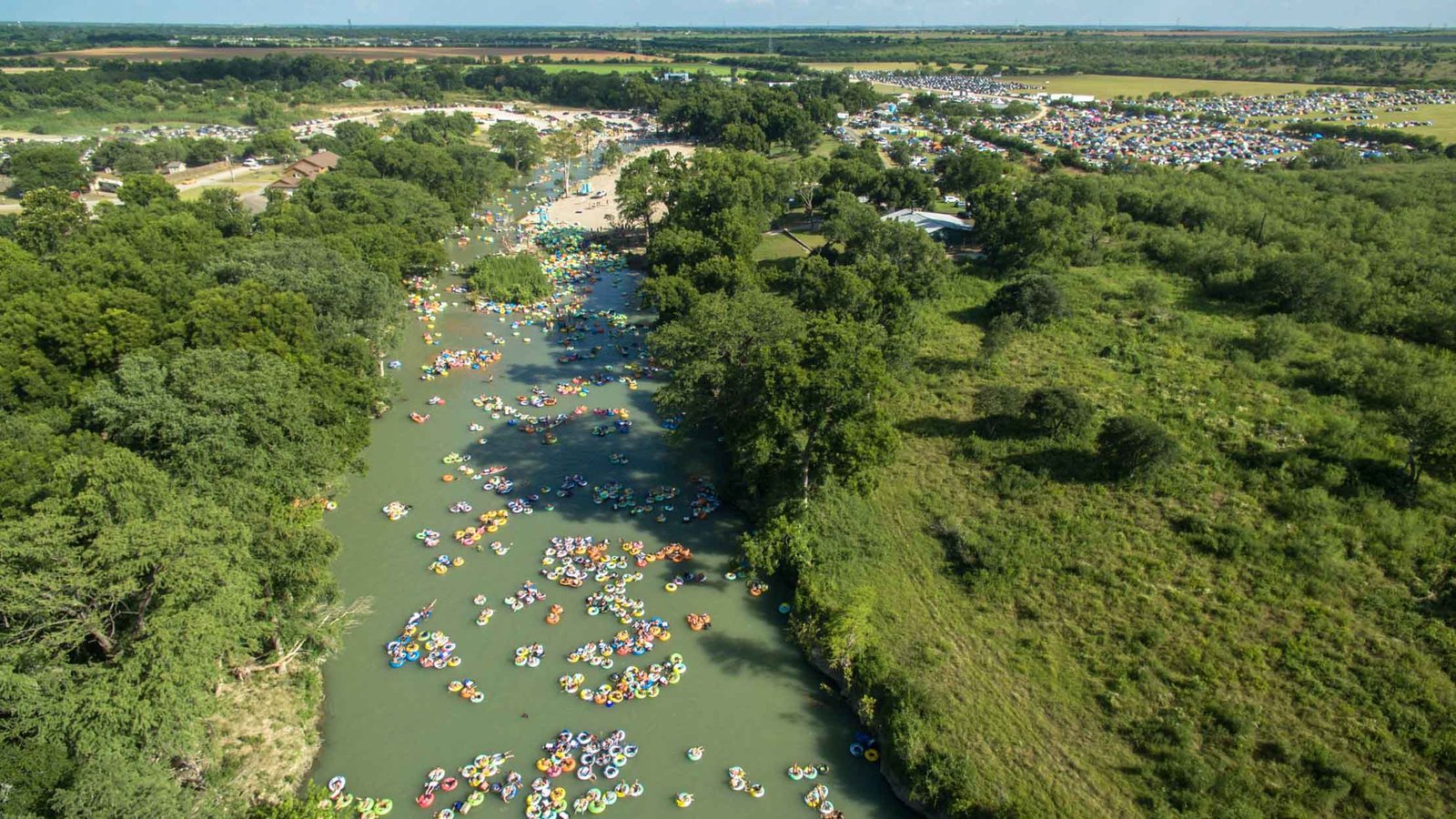

Distribution buildings along the interstate and student-oriented projects near the university are the backbone of building demand in San Marcos, and both sit on ground that deserves attention. The city is built on the Balcones Fault, which marks the boundary between the Hill Country and the Coastal Plains, and its springs rise from the Edwards Aquifer. For a contractor, that means rock on one side, clay on the other and water that must be protected at every step.
We build slabs, paving, foundations and underground utilities in that setting. Our estimators read the geotechnical borings for depth to rock, groundwater and plasticity, then price the earthwork and concrete separately so the owner sees what the ground adds. Interstate 35 is the main highway through the city, with exits 199 through 208 serving different parts of town, and SH 130 and US 183 are the other major roads. Those routes shape truck traffic, haul times and the logistics owners who choose to locate here.
Whether the project is a warehouse, a classroom building or a municipal improvement, we plan the sequence around drainage first.
Logistics on the corridor
A large online retailer was the top employer in 2021 with about 5,000 employees, with the state university second at 3,730. The first number signals what a fulfillment operation does to a small city: truck courts, employee parking, utility upgrades and road work. A logistics fulfillment center typically needs heavy concrete in the trailer court, dock aprons that resist landing-gear loads and a floor flat enough for automation. We price each element separately.
The city is also served by Amtrak's Texas Eagle at San Marcos Station, a reminder that the downtown core and the rail line are active. Work near the tracks involves coordination of clearances and flagging with the railroad, along with drainage that moves water away from the ballast.
Protecting the aquifer and the river
San Marcos Springs, which feed Spring Lake and the San Marcos River, rise from the Edwards Aquifer, and the Blanco River joins the San Marcos River after four miles. Public attention to that water is high, and construction near it is closely watched. Stormwater plans, erosion controls and spill prevention are treated as serious obligations, not paperwork. We keep concrete washout in lined, contained areas, store fuel with secondary containment and inspect silt fence and inlet protection after every storm.
On sites with sensitive features, the erosion control and SWPPP crews we coordinate install controls before the first cut and document inspections. If a pour wash-water problem happens, we stop and fix it at once rather than leaving it for later.
Flood history is real
Floods are part of the town's story from the earliest settlers, and anyone who watches the river after a Hill Country storm understands why. For construction, the lesson is practical: build pads above the flood elevation, keep drainage paths clear and plan for water to arrive faster than you expect. We stage materials outside flow paths, keep pumps available and move equipment to high ground when forecasts turn.
For long underground runs we limit open trench length so a sudden rain does not fill a half-mile of excavation. Our dewatering equipment is part of the standard plan for sites close to the river.
University and student housing
Texas State University draws students and staff, and the city continues to see apartment, dining, retail and campus-edge projects. Multifamily and mixed-use buildings need parking, podium or slab foundations, utilities and sidewalk networks, all built fast to match an academic calendar. We plan pours around the semester start, keep neighbors informed and keep dust and noise within city rules.
For university buildings themselves, the schedule is similar: a fixed opening date, a public owner and a long list of submittals. We prepare the paperwork early.
Crews that stay on the site
We manage excavation, utility installation, forming, reinforcing, placing and finishing, which means the people who open the trench are the people who answer for the pipe. On a fulfillment-type building, that continuity matters because dock pits, trench drains, floor sawcuts and slab edges all depend on accurate work by the earlier trades.
Quality control is routine: we cast cylinders at the frequency the specification requires, measure slump and air content on arrival, record temperatures and check slab flatness and levelness with the instrument the owner specifies. Test results go to the general contractor the same day, and any trucks that fail are rejected at the gate. Our concrete testing and quality control process is written into the proposal, not added later.
What changes the price near the fault
Excavation is the first driver. Where rock is shallow, trenching production drops and the cost per linear foot of pipe rises, so we ask for borings along proposed utility alignments and price rock as a separate unit. Subgrade correction is the second: clay pads may need lime or select fill, and transitions between soil types need careful design.
The third is environmental protection. Added controls near water cost money, but they cost far less than a violation. We include them openly and explain what they do, so that an owner reading the proposal knows why each line is there.
Fault-line ground, rain and summer heat
Mixed soils across the fault mean a pad may be rock on one corner and clay on another. We plan for that by testing during excavation, proposing a transitional fill where needed and checking compaction across the entire pad. Summer pours require retarders and early starts, and a spring storm can turn a clay subgrade to mud in an hour, so we crown and seal the subgrade at the end of each shift.
We work with you on a realistic look-ahead schedule that reflects those conditions rather than a best case.
Corridor neighbors
San Marcos projects often connect to work in Austin to the north, Georgetown farther up the corridor and other cities along the interstate. Developers in the logistics and warehouse business often compare several of these sites at once. The trade partners and site equipment we coordinate move up and down the corridor easily, so you can compare costs across sites with one contractor.
Bring us your San Marcos site
Send the plans and the geotechnical report. We will tell you what the fault and the aquifer mean for your budget.
Common Questions
What does the Balcones Fault mean for my slab?
It means soils can change quickly across a site, from shallow rock to clay. We test as we excavate, adjust the subgrade treatment and follow the structural engineer's design for the foundation.
How do you keep concrete wash water out of the river?
We contain washout in lined pits, never rinse trucks near drains or the creek and inspect the area daily. Rain gets particular attention because overflow is the typical failure.
Can you build truck courts for fulfillment operations?
Yes. Thick reinforced paving, doweled joints and well-designed drainage are standard parts of our truck court scope, and we adjust thickness to the expected loading.
When should I involve a contractor on a flood-prone site?
As early as the concept stage. Pad elevations, detention volume and utility depths all influence cost and are cheaper to change on paper than in the field.
Do you work around university schedules?
Yes. We plan major pours and deliveries to avoid move-in weeks and game days where those affect traffic.